

National Startup Day 2026 offers a powerful moment to pause and listen to the voices shaping India’s entrepreneurial journey. From first-time founders and seasoned entrepreneurs to investors, mentors, and ecosystem enablers, these perspectives reflect the optimism, resilience, and ambition driving India’s startup movement forward. Their words capture not just success stories, but the mindset, lessons, and vision behind building innovative, scalable, and impact-driven ventures in a rapidly evolving ecosystem:
Mr. Aviral Gupta, CEO of Zo World and Zostel: “India is no longer just a startup market – it is a startup powerhouse. Founders today are building companies with global ambition, operational depth, and cultural confidence. This shift reflects a maturing ecosystem where innovation is increasingly tied to long-term value creation rather than short-term valuation.
Zostel represents this new wave of Indian startups that are reimagining experiences at scale, with community and purpose as central growth drivers. Building from India offers a distinct advantage; the ability to innovate quickly, scale responsibly, and remain closely connected to real user needs.
This philosophy extends to platforms like Zo House, which has evolved into a collaborative ecosystem for entrepreneurs and creators, enabling meaningful work, knowledge exchange, and sustainable growth through well-designed infrastructure and community-led living.
As Indian startups expand globally, the next chapter will be defined by brands that are proudly Indian, globally competitive, and focused on building enduring impact.”
Mr. D L Prachotan, Co-Founder and Head of Business Development at Bhanzu: “India is now in a position to build for the entire world. Especially through accessible technologies and the emergence of AI. But if there is one sector where India can really export its services and knowledge to the world, it is education. And in education, it is math and language education. India can play a huge role in changing the landscape of education in 2026. And even in the future years. Even no matter how technology changes over time, math and language will still be the primary skills that every human being needs. And this is where there is a lot of room for cutting-edge products and services to emerge from India.”
Mr. Deepak Agrawal, Co-founder and CBO, Proventus Agrocom Limited (ProV): “The F&B startup market is seen evolving with innovation in alternative proteins, functional nutrition, digitization, and e-commerce. India today is uniquely positioned to build not just for its own consumers, but for the global market. From our position as a startup company focusing on healthy snacks, we see a considerable transition in the Indian food & beverage marketplace; consumers are now making food choices based on health rather than just taste. Modern retail, e-commerce, and quick commerce have opened powerful new channels, allowing young brands to reach consumers faster and more transparently than ever before. With advancements in food science and supply chain tech, Indian startups are now building scalable, clean-label products that meet global standards while staying rooted in local preferences. At Prov Foods, we truly believe that the demand for healthy snacking is becoming mainstream and is an everyday part of consumers’ lives today. Sustainable innovation in better-for-you products will drive growth within India and that there is no limit to what we can offer as a result.
Thank you for your time and support.”
Dr. Sanjay Katkar, Joint Managing Director at Quick Heal Technologies. ( A global cybersecurity solutions provider): “Start-ups as a subject is particularly close to my heart because they represent the courage and ambition of India’s innovators. Today, India’s startup ecosystem has crossed a remarkable milestone with more than 2 lakh DPIIT-recognised startups, collectively generating over 21 lakh jobs and powering entrepreneurship across sectors.
India’s startup ecosystem is a powerful reflection of the country’s innovation mindset which is fast moving, digital first, and increasingly global in ambition. As startups scale at speed, trust becomes their strongest differentiator. In a world where technology knows no borders, cybersecurity is no longer optional. It is fundamental to sustainable growth.
At Quick Heal Technologies Limited, we view the protection of startups and small businesses as a national priority. Founders should be able to focus on building products and markets, not worrying about cyber risk. Through Seqrite, we are simplifying enterprise grade security so it is easy to deploy, easy to manage, and effective even without large dedicated security teams. Our AI driven capabilities such as GoDeep.AI, AntiFraud.AI, the Seqrite Intelligent Assistant, and threat intelligence from Seqrite Labs help organisations predict, detect, and respond to threats in real time. This ensures that even the smallest enterprise can operate with the same level of confidence as large global corporations.
On National Startup Day, we celebrate India’s entrepreneurs and the resilient digital foundation they are creating for the future.”
Mr. Prakash Ravindran, CEO & Director, InstiFi (A payment aggregator enabling secure and seamless digital payments).
‘India’s startup ecosystem is moving into a more mature phase. Long-term sustainability, regulatory discipline, and customer trust are becoming as important as innovation and scale. For fintech startups, success will depend on building strong foundations, secure infrastructure, transparent processes, and compliance-first operations. As the ecosystem evolves, startups that focus on solving real business challenges while maintaining governance standards will be better positioned to grow responsibly. At InstiFI, we see this phase as an opportunity to contribute meaningfully by enabling reliable digital payments for businesses of all sizes. The coming years will define how Indian startups build resilience, credibility, and lasting impact across the digital economy.”
Quote on behalf of Mr. Harsha Solanki, VP GM Asia, Infobip (India’s omnichannel marketing platform): “India’s startup ecosystem has become the third-largest hub globally, with over 6 lakh startups. Many of these are now emerging from tier 2 and tier 3 cities, focusing on reaching users across India. As innovation expands beyond metros, founders working in areas such as deeptech, agritech, AI, and Bharat-first solutions are navigating and addressing a unique set of challenges. Factors like building trust, ensuring connectivity, scaling communication, and offering language diversity often determine how quickly they can grow.
Infobip works alongside startups as an enabler rather than just a technology provider. Through our CPaaS capabilities and the Infobip Startup Tribe program, we support startups in building reliable, localized, and cost-effective communication via free communication credits, technical support, and access to global-grade infrastructure. It helps them connect with users more effectively.
This National Startup Day, we celebrate India’s entrepreneurial spirit and its role in shaping a future-ready economy. At Infobip, we remain dedicated to supporting the startups at every step in their journey, further paving the way for sustained innovation and creating meaningful impact.”
Susmita Chakravarty, Founder & Director of Eastern Staple: “Starting a business in India comes with very real, day-to-day challenges , managing teams, sourcing reliably, and ensuring quality while scaling operations. Initiatives like Startup India provide support and visibility, but the real lessons come from working on the ground, solving problems as they arise.
This is how Eastern Staple began. During the pandemic, my home kitchen became a way to serve families and communities, and what started small grew into a structured B2B operation catering corporates, hostels, industrial plants, and large events. Scaling meant building systems, training teams, and maintaining the warmth and integrity of home-style food every day.
Today, we serve thousands of meals daily with a team of over 50 people. National Startup Day is a reminder that meaningful growth comes from consistent effort, resilience, and practical problem-solving.”
Mr. Kunal Arya Co-founder & Managing Director Zelio E-Mobility Limited: “When we started Zelio E-Mobility Limited in 2021, our goal was clear—to build electric two-wheelers that are practical, reliable, affordable, and truly accessible for everyday India. In 2024, we extended this vision to electric three-wheelers, addressing last-mile mobility and livelihood needs with the same focus on value and trust.
Over this journey, we learned that building a sustainable EV business is not just about technology, but about understanding real customer challenges, listening closely to riders and dealers, and scaling with discipline. From navigating supply-chain constraints to earning market confidence, every challenge has strengthened our processes and reinforced our commitment to long-term value creation.
From a startup idea to a nationwide presence with over 350 dealerships and more than 200,000 riders on the road, our journey reaffirms one belief—true success is measured not only in numbers, but in the trust people place in your brand. Our successful SME IPO further reflects the confidence investors have shown in our vision and supports the next phase of responsible growth.
At Zelio, we remain firmly guided by our belief: “The Future is Electric.”
Sandeep Khuperkar, Founder & CEO, Data Science Wizards: “National Startup Day reflects how India’s startup ecosystem is evolving from building fast-moving products to creating foundational systems that enterprises can rely on. In AI, that shift is especially clear. The challenge is no longer experimentation, but operating AI safely, continuously, and at scale within real-world enterprise environments. The next 12–16 months will be critical, as organizations move beyond building AI to being able to operate and govern it securely in production. This is also when enterprises return to first principles enterprise architecture, solution architecture, and system design to embed AI into the core fabric of the enterprise. As AI moves into regulated workflows and core decision-making, governance must be embedded as code within the system itself. Startups that focus on operability, resilience, and governance-by-design will play a critical role in shaping trusted AI infrastructure for the future.”
Mr. Alok Anibha, Founder – Girikon.AI: “Startup Day is a reminder that building a sustainable company goes beyond innovationit requires resilience, long-term thinking, and the ability to adapt to rapidly changing markets. As Indian startups mature, the focus must shift from just launching ideas to building scalable, responsible businesses that create real value for customers and contribute meaningfully to the economy.”
Mr. Nitin Seth, Co-founder & CEO, Conversive: “National Startup Day is a celebration of what makes India such an exciting place to build right now. The energy, ambition, and talent in this ecosystem are unlike anything I’ve seen before. We’re seeing startups go deeper by solving for real complexity, not just convenience. And what’s really promising is how tech and trust are starting to come together in meaningful ways. At Conversive, we’re proud to be part of this journey by helping professionals and service brands create smarter, more human conversations at scale. The next few years will be about depth, resilience, and building companies that truly understand India. And I think we’re just getting started.”
Mr. Salil Ahuja, Chief Strategy Officer, Shaurrya Teleservices: “India’s startup ecosystem is scaling faster than ever, but its growth is fundamentally dependent on the strength of underlying complete digital solutions & digital infrastructure. Today, over 70 percent of startup operations are cloud-led and data-intensive, making reliable, high-capacity connectivity a non-negotiable requirement rather than a competitive advantage. At Shaurrya Teleservices, we see neutral, carrier-agnostic complete digital solutions as a critical growth catalyst for startups, enabling faster market expansion without the cost and complexity of fragmented networks. Shared infrastructure models allow startups to access enterprise-grade connectivity across offices, campuses, and emerging urban clusters, while optimising deployment timelines and operating costs. As startups increasingly expand beyond metros into Tier 2 and Tier 3 markets, resilient and scalable connectivity becomes essential to support innovation, speed, and customer experience. Strengthening India’s digital backbone is therefore central to sustaining startup growth and building globally competitive businesses.”
 Crompton Simplifies Household Water Management with INTELLISENSE SmartPro
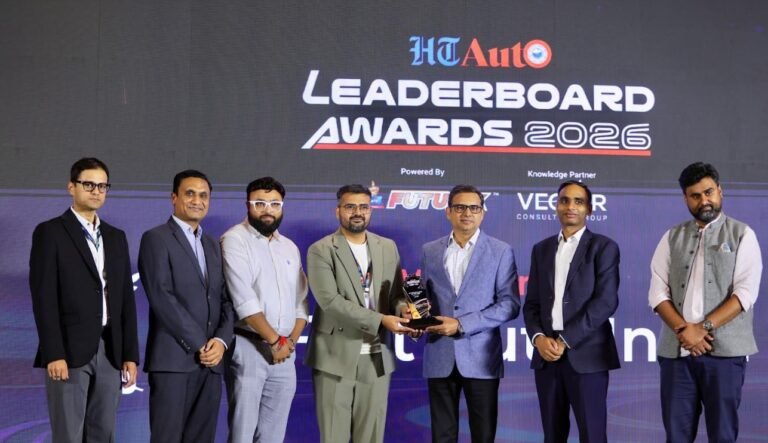 VinFast India Named ‘EV Manufacturer of the Year’ at HT Auto Leaderboard Awards 2026
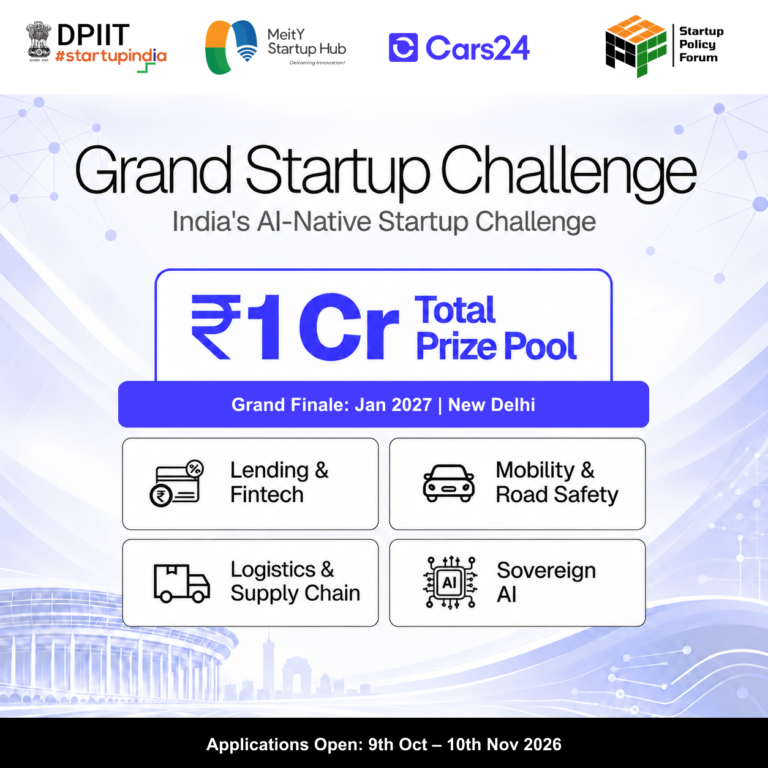 Cars24 Announces Inaugural Grand Startup Challenge with ₹1 Crore Prize Pool to Empower India’s Founders