
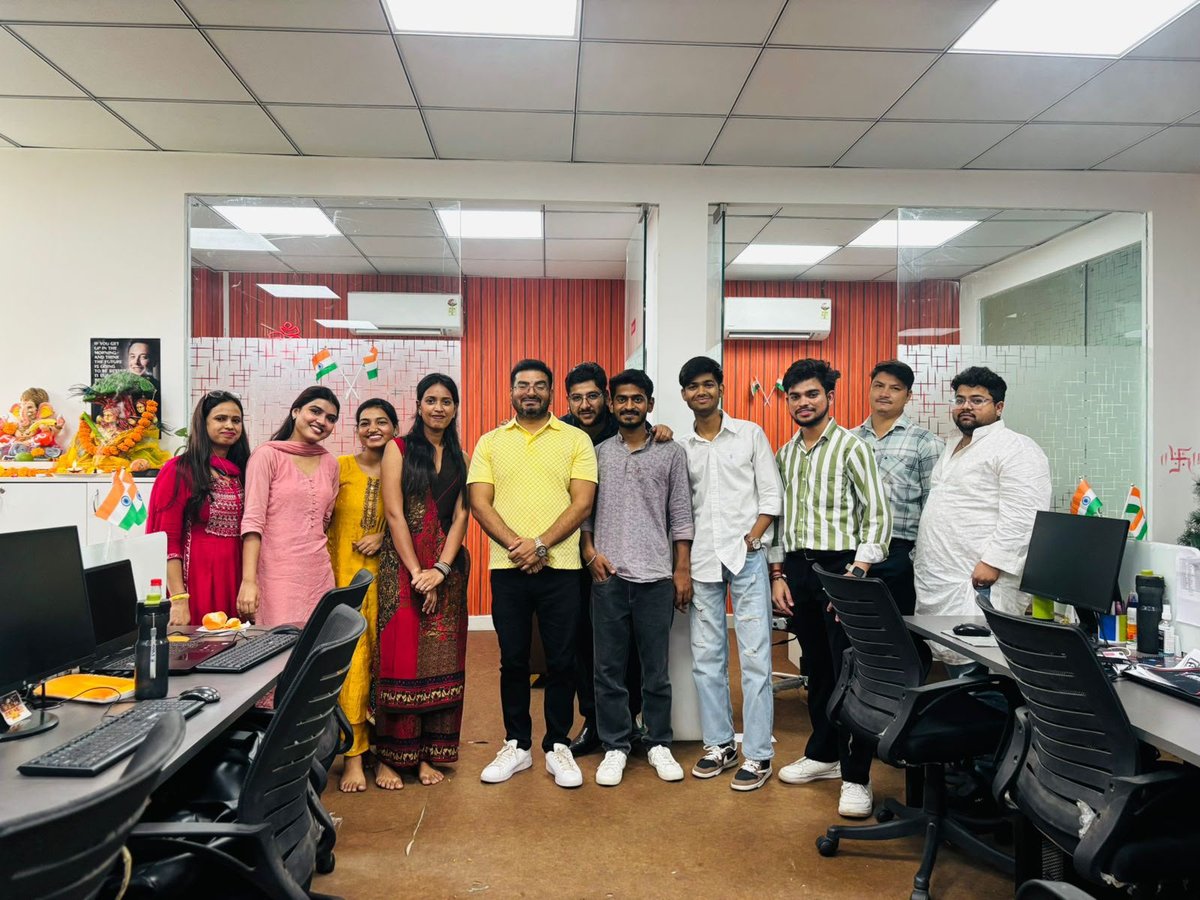

Paan has been woven into Indian life for centuries – served at celebrations, after meals, and on street corners across the country. Yet despite an estimated market worth over ₹5,000 crore (company-cited industry estimates), the category remained stubbornly unorganised: small stalls, inconsistent hygiene, and a strong association with tobacco that narrowed its appeal beyond traditional consumers.
In 2016, P.N. Thakur asked a simple question: what if paan could be reimagined as a contemporary, hygienic, family-friendly experience, served in branded cafés and completely free of tobacco?
Eight years later, Mast Banarasi Paan operates 400+ outlets across 20+ states, serves close to 1 lakh paans daily, and is projecting ₹50 crore in annual franchise network sales for FY 2026–27 – all without raising external capital.
Key Metrics at a Glance^1
- Outlets: 400+ across 20+ states and 320+ cities
- Daily paan sales: ~1 lakh across the franchise network
- Company turnover: ₹6–7 crore annual (franchisor revenue)
- Franchise network sales: ₹50 crore projected for FY 2026–27 (aggregate outlet sales)
- Everyday pricing: ₹30–₹100 (primary consumer tier)
- Premium pricing: Up to ₹2,100 (celebrations and events)
- Initial investment: ₹2 lakh (co-founder personal savings, 2016)
- Growth period: 8 years (2016–2024, bootstrapped)
^1 All figures are company-reported and unaudited. “Franchise network sales” represent aggregate outlet-level retail sales, not company revenue. Market size for paan is based on company-cited industry estimates.


The Problem: A Category Left Behind
Paan represents a paradox in Indian commerce. It is culturally embedded, widely consumed, and economically significant – yet almost entirely informal. Walk into any Indian neighbourhood and you’ll find paan vendors: small stalls with minimal infrastructure, inconsistent hygiene, preparation methods unchanged in decades, and an inextricable link to tobacco that limits appeal among families and younger audiences.
Thakur grew up observing this disconnect. “I felt that a product so widely accepted deserved a more organised, hygienic and contemporary business format,” he recalls. “This gap between a culturally significant product and its largely unorganised format convinced me that there was an opportunity worth pursuing.”


Rather than launch immediately, Thakur spent nearly three years researching the category – understanding preparation techniques, supply chains, consumer preferences, and the structural barriers preventing organisation. This extended runway of research distinguished his approach from typical startup thinking focused on speed to market.
The core insight was simple but powerful: if paan could be stripped of its tobacco association, positioned as a contemporary dessert rather than a traditional indulgence, and served in a hygienic, branded café environment with standardised quality, it might appeal to an entirely new consumer base – families, younger urbanites, and event hosts seeking a modern twist on a familiar product.
From Vision to Reality: The ₹2 Lakh Beginning
When Thakur decided to launch Mast Banarasi Paan in 2016, he did not seek venture capital or institutional backing. Instead, he co-founded the business with his wife, Maya Kumari, whose decision became the emotional and financial cornerstone of the venture.


In a household that valued hard work and discipline, the choice was both personal and strategic: Maya left her job and invested her personal savings – around ₹2 lakh – into an unproven idea. There was no safety net, no external validation, just a shared conviction that paan could be done differently. The first outlets opened with that modest capital, serving 100% tobacco-free paan in a clean, structured café environment, with standardised preparation, consistent pricing (₹30–₹100 for everyday variants), and a focus on family-friendly experience. Early customers – often sceptical at first – returned after experiencing a hygienic, branded setting, giving the founders the confidence to continue.
This set the tone for a deeply bootstrapped growth story. The company remained profitable from early on, reinvesting earnings into new outlets rather than burning capital in pursuit of scale. There were no investor board meetings, no venture debt negotiations, and no institutional pressure for rapid expansion at the cost of unit economics.
The Perception Challenge: Changing Deep-Rooted Associations
Building a branded paan business required more than operational execution. It required changing consumer perception – a task Thakur initially underestimated.
“I initially believed that offering a clean, tobacco-free and well-presented paan would win consumers over relatively quickly,” he admits. “In reality, changing a perception built over generations required considerable time and patience.”
The company’s strategy relied on a deliberate trust-building loop:
Low-price trial (₹30) → Clean, branded experience → Repeat visits → Word-of-mouth among families and young urban consumers → Growing franchisee confidence → More outlets opening → Category expansion beyond traditional consumers
Rather than compete with street vendors on price, Mast Banarasi Paan competed on experience, hygiene, consistency and lifestyle positioning. Outlets were designed for structured, family-friendly consumption – not quick, anonymous transactions. Pricing of ₹30–100 for everyday variants was accessible for regular consumption while clearly premium compared to traditional venues.
“Once people tried our product in a clean, organised environment, they returned, and word gradually spread.”
– P.N. Thakur
“Trust is built through experience,” Thakur adds. This is not the narrative of rapid adoption celebrated in tech startups. It is a story of steady, standards-first execution – opening outlets, maintaining quality, building reputation location by location, city by city.
Journey Timeline
Phase 1: Research & Launch (2013–2016)
- 2013–2016: Three years of category research and product development
- 2016: Launch of first Mast Banarasi Paan outlet with ₹2 lakh bootstrapped capital
Phase 2: Building Confidence (2016–2020)
- 2016–2020: Gradual expansion through company-owned and early franchise outlets; focus on perception-building and operational standardisation
- 2020: Strategic pivot to franchise-led model to enable capital-efficient scaling
Phase 3: Scaling & Future (2020–2027)
- 2020–2024: Expansion from early locations to 400+ outlets across 20+ states
- 2024–2025: Scaling to ~1 lakh daily paans across the network
- 2025–2027: On track toward ₹50 crore franchise network sales (FY 2026–27 projection); targeting ~100 net new outlets per year to reach 600+; evaluating strategic capital; exploring international diaspora markets (Gulf, North America, UK)
The Franchise-Led Scaling Model
By 2020, Mast Banarasi Paan had proven the core concept worked profitably. Rather than raise capital to open company-owned outlets aggressively, Thakur pivoted to a franchise-led model – a decision central to scaling without external funding.
Why Franchise
The franchise strategy offered several advantages simultaneously:
- Capital efficiency: Distributed capital requirements across franchise partners rather than requiring company financing for every outlet
- Incentive alignment: Franchise partners’ financial interests aligned directly with brand success
- Local presence: Distributed ownership enabled faster market entry and local responsiveness
- Operational focus: Central team concentrated on brand standards, supply chain and partner support rather than managing hundreds of outlets
How It Works: Formats, Training, Supply Chain
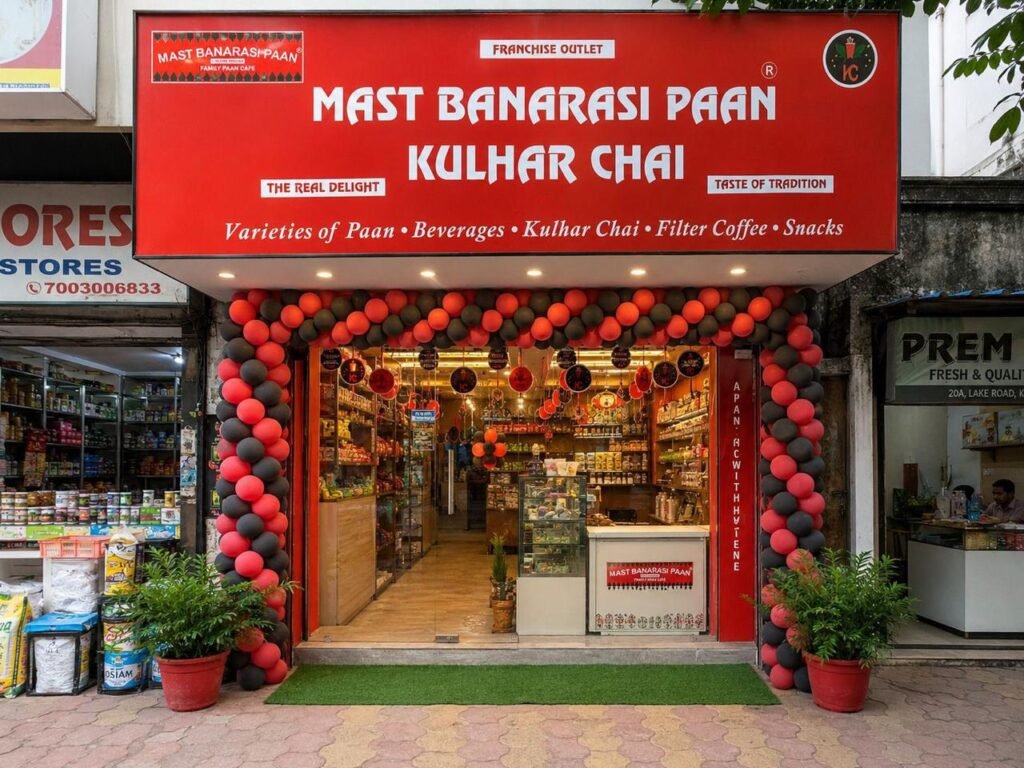
Mast Banarasi Paan offers multiple format options – premium outlets, cafés, and kiosks – suited to different investment levels and locations. A 300 sq ft kiosk requires lower investment than a full café, enabling diverse franchisees to participate.
Central teams manage supply chain, warehousing and backend infrastructure, ensuring consistency despite distributed ownership. All franchisees receive:
- Standardised training modules covering preparation, hygiene, customer service and POS operations
- Centralised sourcing of ingredients and supplies to maintain quality and negotiate better unit costs
- Standard recipes and preparation protocols specifying exact measurements for lime, flavourings and fillings, ensuring consistent taste and quality across outlets
- Regular audits and quality checks maintaining brand standards across the network
- Marketing and brand support enabling franchisees to leverage national brand building
Franchise partners often cite visible repeat customers and steady family footfall as key factors in their decision to invest – evidence that the trust-building loop is working at ground level.
Understanding the Financial Model
A critical distinction clarifies the business’s actual scale:
- Company turnover (₹6–7 crore annually): Franchisor revenue from franchise fees, royalties, supply agreements and brand licensing across 400+ partners. This is the company’s direct revenue.
- Franchise network sales (₹50 crore projected FY 2026–27): Combined retail sales across all franchised outlets, demonstrating economic impact across the network but not counting as company revenue.
This structure allows Mast Banarasi Paan to capture economics across the network without absorbing the capital or operational complexity of 400+ individual stores. Profitability is built in: franchise partners carry capital requirements and operational risk; the franchisor earns through royalties and supply agreements.
Why It Worked: Three Core Mechanisms
1. Standardisation Levers
Consistency across 400+ outlets is maintained through specific operational controls:
- Centralised ingredient sourcing ensures identical betel leaf quality, areca nut, lime and flavourings
- Standard recipes specify exact measurements and preparation techniques, reducing variation between outlets
- Structured training programmes ensure new franchisees and staff follow identical service and hygiene standards
- Regular audits and POS data enable real-time tracking of inventory, sales and customer preferences, supporting quality discipline
Without these levers, independent outlets would inevitably drift in quality, causing brand deterioration.
2. Category Expansion, Not Just Substitution
Mast Banarasi Paan is not simply stealing share from traditional stalls. It is creating new consumption occasions:
- Family dessert occasions: Paan as a branded, hygienic treat for families dining together
- Event catering: Premium offerings (up to ₹2,100) for weddings, corporate events and celebrations – an entirely new revenue stream
- Lifestyle consumption: Young urbanites treating paan as a modern indulgence rather than a traditional product
- Delivery channels: Swiggy and Zomato partnerships enabling home delivery, creating occasions impossible at traditional stalls
This expansion of the category – rather than just winning share from existing vendors – is why Mast can grow without cannibalising the traditional stall market.
3. Trust-Building Through Progressive Experience
The journey from trial to loyalty follows a deliberate pattern:
- Low-friction trial: ₹30 entry point makes first purchase low-risk
- Clean environment validation: First experience in a branded café proves “hygiene is possible”
- Repeat visits: Customer returns, building habit and trust
- Word-of-mouth amplification: Positive experiences shared with families and peers
- Franchisee confidence: Growing consumer base attracts franchise partners, enabling expansion
- Network effects: More outlets increase accessibility, reinforcing habit and scale
Product Strategy: Bridging Tradition and Contemporary
Mast Banarasi Paan’s portfolio balances cultural authenticity with modern appeal. Traditional variants like meetha (sweet) and sada (plain) paan remain core offerings, honouring the product’s heritage. Contemporary flavours target younger, urban consumers and occasion-based purchases.
Tiered pricing:
- Everyday paans (₹30–₹100): Core offerings for regular consumption and habit formation
- Premium/celebration paans (₹500–₹2,100): Occasion-based products for weddings, corporate events and premium celebrations
This dual pricing serves multiple segments: families seeking daily treats, younger urbanites treating paan as a lifestyle product, and event planners booking paan catering.
Competition: Organising an Unorganised Market
Mast Banarasi Paan does not face direct competition from other organised paan chains – because almost none exist. The real competition is the vast, unorganised universe of traditional paan vendors across India, operating with minimal infrastructure, zero brand building and razor-thin margins.
This paradox is both opportunity and challenge. The absence of branded competitors validates the market opportunity, yet the dominance of unorganised players means Mast must continuously prove consumers will pay premium prices for organisation and hygiene.
Rather than compete on price, the brand competes on experience, positioning and occasion-creation. Outlets are designed for structured, family-friendly consumption – not quick, anonymous transactions. Pricing reflects this: ₹30–100 is premium compared to stalls, but accessible for habitual consumption.
The strategy is to expand the category – to create new contexts where paan is consumed in branded, formal venues. Growth to 400+ outlets suggests this is working.
Growth Without External Capital: A Deliberate Choice
As Mast Banarasi Paan approaches its next phase, the company is now actively exploring strategic growth capital. This shift represents not financial desperation, but a deliberate choice about when to access external funding.
“The company is now actively exploring strategic growth capital to accelerate its next phase of expansion, strengthen technology and supply-chain capabilities, invest in brand building, and further develop its franchise partner ecosystem.”
– P.N. Thakur
The capital strategy includes evaluating international markets with sizeable Indian diaspora populations – the Gulf, North America and the UK.
Remaining bootstrapped through eight years of growth served multiple purposes:
- Proved the model works without institutional validation
- Ensured profitability and capital efficiency from the beginning
- Kept ownership concentrated and decision-making aligned with long-term value
- Maintained focus on unit economics rather than growth-at-all-costs metrics
Now, with scale and profitability established, external capital becomes a tool to accelerate growth rather than a survival necessity.
What’s Next: 600 Outlets and Strategic Expansion
Mast Banarasi Paan’s near-term plan is specific and multi-dimensional:
Outlet Growth
Expand from 400+ to 600 outlets over the next two years, implying ~100 net new outlets annually – a cadence that balances expansion with quality and franchisee success.
Franchise Productivity
- Higher average bill per customer (via premium offerings and upselling)
- Improved footfall and repeat rates (through location selection and local marketing)
- Better delivery mix (via Swiggy and Zomato partnerships)
- Improved franchisee operational efficiency
Technology and Supply Chain
- Front-end tech: Integrated POS, franchise dashboards, customer analytics
- Back-end tech: Demand forecasting, inventory optimisation, vendor management
- Physical infrastructure: Cold chain, logistics, central kitchen for premium products and catering
- Quality and consistency: Maintaining brand standards and franchisee profitability as the network grows, avoiding over-saturation in certain cities
Brand Building
- National advertising and digital marketing
- Social media and influencer partnerships
- Event sponsorships and experiential marketing to cement category leadership
International Expansion
Evaluating markets with significant Indian populations – Gulf (UAE, Saudi Arabia), North America (US, Canada), and UK – where cultural familiarity and premium hygiene positioning could resonate with the diaspora.
Lessons for Entrepreneurs: Patience, Consistency, and Genuine Partnership
Thakur’s reflections offer perspective rarely heard in venture-backed startup circles.
“Look closely at categories that may seem ordinary or unglamorous. Often, significant opportunities lie in improving something people already use every day, but that has yet to be organised or modernised.”
– P.N. Thakur
The emphasis on patience is notable in an ecosystem rewarding rapid scaling and early exits.
“Changing deep-rooted consumer perceptions takes time and consistent execution.”
– P.N. Thakur
Thakur emphasises that the journey from unproven idea to market leadership required steady, standards-first progress over a full decade.
Finally, he points to the personal dimension:
“My wife and co-founder’s willingness to leave her job and invest her savings was instrumental in getting the business off the ground. Entrepreneurship is often strengthened by the support of those around you.”
– P.N. Thakur
This perspective is rarely celebrated in founder culture, which emphasises individual genius or scrappy solo founders. Yet the willingness of a partner to make financial and professional sacrifices – to believe in an unproven idea enough to stake personal capital – forms the foundation of many successful, long-term businesses.
Broader Implications: Organising the Unorganised
Mast Banarasi Paan’s success illustrates a larger opportunity for India’s economy: significant value can be created by organising categories that have long operated informally.
India’s unorganised retail sector – street vendors, neighbourhood stalls, small independent shops – represents trillions of rupees in economic activity, most of it fragmented and inconsistent in quality. Organising these categories does not require technology disruption or venture-scale capital. It requires what Mast demonstrated: identifying a category with strong cultural roots and high-frequency consumption, designing a hygienic, branded alternative, executing with operational discipline, and scaling methodically through franchise partners.
The same model could apply to regional Indian sweets, snacks, beverages, and other categories where tradition is strong, consumption is habitual, but organisation is minimal. The pattern – standardisation, hygiene, consistent quality, franchise scaling, and patience – is replicable across India’s vast informal commerce landscape.
For investors and entrepreneurs, the lesson is clear: the next wave of significant food and beverage value creation in India may not come from entirely new categories or technology-enabled platforms. It may come from entrepreneurs willing to take 3–5 years to understand an unorganised category, design a better format, execute with operational discipline, and scale methodically through franchise partners.
Mast Banarasi Paan’s eight-year journey from ₹2 lakh bootstrapped investment to 400+ outlets and a projected ₹50 crore franchise network sales (FY 2026–27) illustrates a distinct model of business building: methodical category organisation rather than technology disruption, franchise scaling rather than venture-funded rapid expansion, and profitability as the foundation for external capital.
The company’s success rests on a simple insight: a culturally significant, high-frequency product category had not been organised, branded, or made genuinely hygienic at scale. Solving that problem did not require venture capital or compelling pitch decks. It required three years of research, ₹2 lakh from a co-founder’s personal savings, consistent execution across hundreds of outlets, and patience to let consumer trust build through experience.
The result is a business that is now profitable, capital-efficient, and positioned to accelerate growth from a position of strength. In a startup ecosystem often obsessed with unicorns and venture-backed scale, Mast Banarasi Paan reminds us that substantial value can be created by taking an ordinary product, organising it, standardising its quality, and executing with consistency. What Mast Banarasi Paan has proven in paan, others can replicate across India’s vast, unorganised food and beverage landscape.
Disclosure
This article is based on an interview with P.N. Thakur, Founder & CEO of Mast Banarasi Paan. Company-reported figures – including outlet count (400+), daily paan sales (~1 lakh), franchise network sales projections (₹50 crore FY 2026–27), and company turnover (₹6–7 crore) – have not been independently audited for this article. Market size estimates for the paan category are based on company-cited industry estimates. All figures should be considered company-reported and unaudited.