

New Delhi, Delhi, India | 27th January 2020: Ms. Pratibha Jain, Partner and Head of the New Delhi office of Nishith Desai Associates (NDA), recently spoke at the 2020 World Economic Forum (WEF) and called for regulations to be eased for the country’s fintech sector to promote financial inclusion.
Ms. Jain speaking in Davos, emphasized that regulations were critical in ensuring fintech solutions were not used for money laundering or terror financing, but banning new technologies will prove to be counterproductive.
“As technologies are still evolving, prescriptive laws will keep becoming obsolete as technologies change, and banning technologies like cryptocurrencies will only push the market for them to develop outside India,” she said.
Furthermore, Ms. Jain observed that “Anti-Money Laundering and Counter-Terrorism Financing regulations are undoubtedly very important for a country like India where the parallel cash economy and terrorism financing – both of which are a major challenge to not only national security, but also for economic growth and development.”
“In that sense, they help protect the rule of law and democracy. They are also important for international security.”
A corporate lawyer admitted to legal practice in India and the USA. Ms. Jain made her comments during the session on, “Anti-Money Laundering and Counter Terrorist Financing (AMLCTF) System in Modern FinTech Industry,” at the Caspian Week, WEF.
While India does not have a unified code of laws governing fintech. Fintech activities in India are primarily regulated by the Reserve Bank of India (RBI), India’s banking regulator. Regulation takes the form of acts passed by the legislature and rules and regulations passed by the RBI and other regulators.
Currently, there is a rising debate in the country over banning of crypto currencies continues in India, with the RBI circular prohibiting entities that it regulates, including banks from providing services to persons or entities dealing in or settling crypto currencies being challenged in Supreme Court of India by the Internet and Mobile Association of India.
RBI in its affidavit to the Supreme Court stated that “It is an admitted fact that VCs [virtual currencies] have been used to purchase illegal and illicit goods ranging from guns and ammunition to drugs,” hence, citing national security concerns for their move.
Giving a detailed overview of the issue and in particular the implications for regulation, Ms. Jain observed, “I would argue that such regulations need to be balanced and principle-based rather than rule-based, and we should seriously consider three issues: first, the efficacy of fintech companies to provide solutions for financial inclusion. According to a 2018 report released by the World Bank, India is home to the second-largest unbanked population in the world. Fintech can significantly help with financial inclusion by obviating the need for brick and mortar banks to serve the traditionally underserved and unserved population in India. Digital banks, digital lenders, digital insurers – all can help fill this gap. But, this requires government to promote innovation and the ease of doing business for these companies, especially when the amounts in question are not too significant.”
“Second, myriad of laws that don’t allow for effective transfer between nations or stop technological development.”
“Third, the safeguards against abuse of such laws by governments is also an area of concern. The definition of the proceeds of crime under the Prevention of Money Laundering Act (PMLA) is very broad that even a genuine purchase of property by a bank in an auction can run the risk of being accessed by authorities as proceeds of crime. When laws don’t have the checks and balances to ensure basic fundamental rights are protected, such laws are susceptible to be misused for political motivated prosecutions. Unfortunately, the efficacy of these laws is not yet proven.”
While technology has yet again been a central topic of discussion at this year’s World Economic Forum in Davos, Switzerland, this year’s deliberations also saw a determined focus on fintech and how financial inclusion is key to meeting the UN’s Sustainable Development Goals.
Ms. Jain is an Aspen Fellow and a law graduate from the University of Delhi, University of Oxford and Harvard Law School.

 Crompton Simplifies Household Water Management with INTELLISENSE SmartPro
 VinFast India Named ‘EV Manufacturer of the Year’ at HT Auto Leaderboard Awards 2026
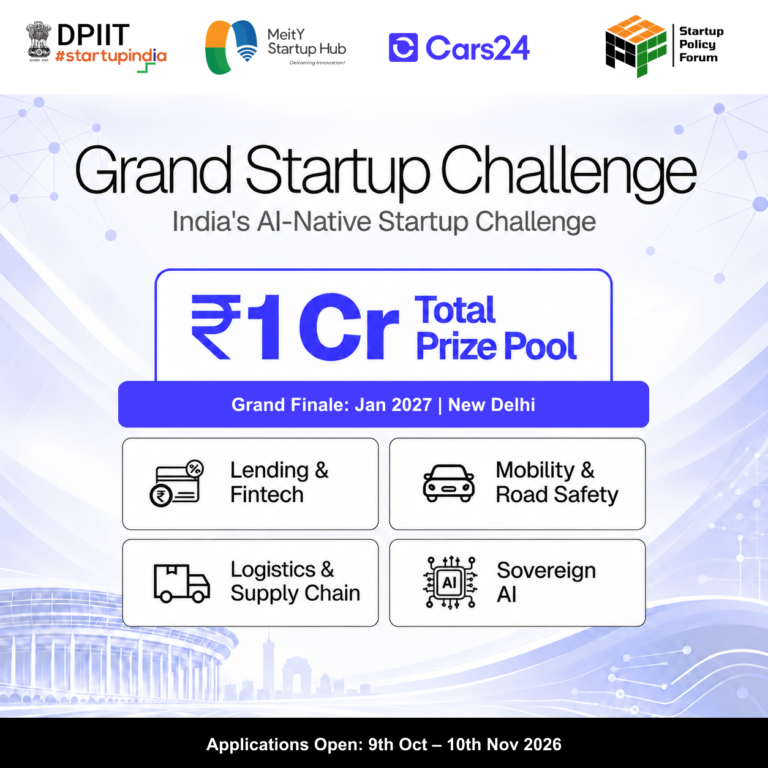 Cars24 Announces Inaugural Grand Startup Challenge with ₹1 Crore Prize Pool to Empower India’s Founders