

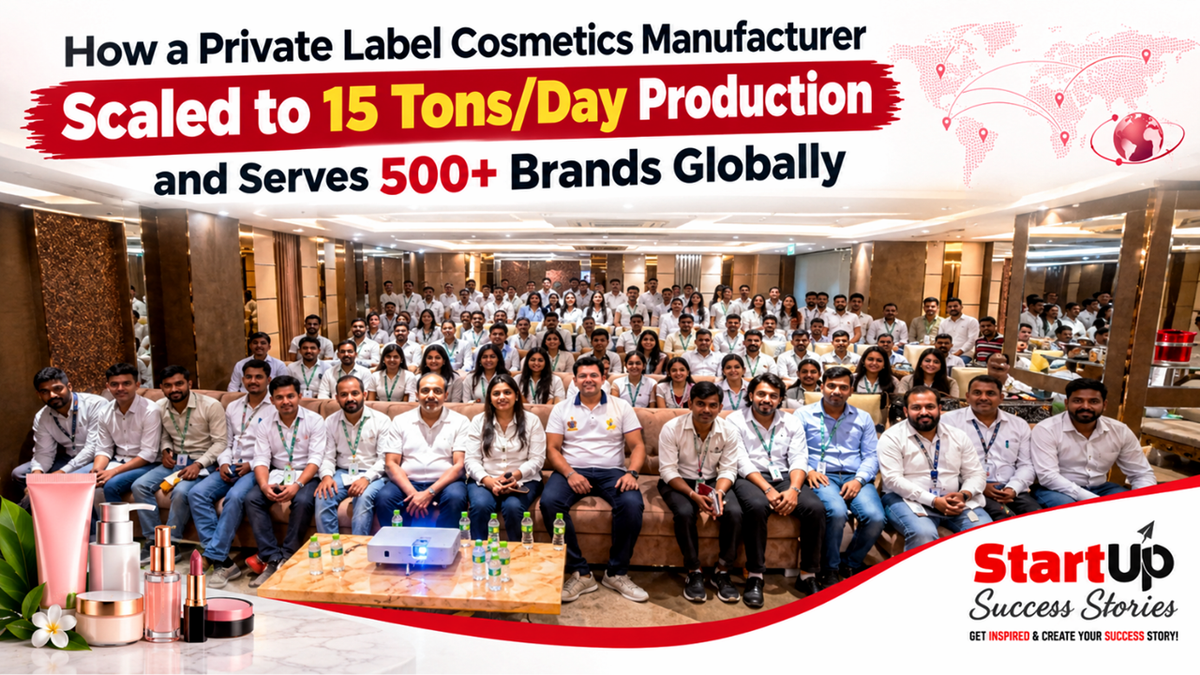
The beauty and personal-care industry is experiencing a boom in India and globally. Entrepreneurs with compelling product ideas, emerging brands seeking to scale, and established companies launching new product lines all face the same fundamental challenge: bringing their vision to market requires manufacturing infrastructure, formulation expertise, quality control systems, and operational complexity that most don’t possess.
In 2013, Aayush Gupta recognised this gap and launched Bo International with a straightforward mission: provide businesses with reliable, end-to-end manufacturing solutions for cosmetics, beauty, personal care and wellness products.
Eleven years later, Bo International operates from a 130,000 sq ft manufacturing facility in Haryana, employs 250+ professionals including chemists and product-development specialists, serves 500+ clients across 50+ countries, and produces up to 15 tons per day-making it one of India’s most comprehensive B2B beauty manufacturing partners.
The company’s journey illustrates a critical insight for entrepreneurs: in the beauty industry, having a great product idea is only the beginning. Turning that idea into a manufactured reality requires partners who understand formulation, quality, packaging, compliance, and international logistics-capabilities that most emerging brands lack.
Key Metrics at a Glance^1
- Clients served: 500+
- Countries served: 50+
- Manufacturing facility: 130,000 sq ft
- Production capacity: Up to 15 tons per day
- Team size: 250+ professionals (chemists, chemical engineers, product-development specialists, manufacturing professionals)
- Product categories: 12+ (skincare, haircare, perfumes, makeup, men’s grooming, baby care, bath & body, oral care, pet care, aromatherapy, Ayurvedic products, and more)
- Available ingredients: 3,000+ natural and naturally derived options
- Year founded: 2013
- Headquarters: Gurugram, Haryana
- Manufacturing facility: Jhajjar, Haryana
^1 All figures are company-reported. Current annual turnover and funding information have not been publicly disclosed and should be confirmed directly with the company if required for publication.
The Problem: Turning Ideas Into Manufactured Reality
The beauty and personal-care industry is crowded with entrepreneurs and emerging brands-but most face a critical bottleneck: they have product ideas but lack the infrastructure, expertise, and resources to manufacture at scale.
The barriers are substantial. Developing a cosmetic or personal-care product requires formulation expertise, access to quality ingredients, testing capabilities, manufacturing equipment, quality control systems, and regulatory compliance knowledge. Building this infrastructure in-house demands significant capital, technical expertise, and operational maturity that most startups and emerging brands simply don’t possess.
Entrepreneurs attempting to overcome this hurdle face additional challenges: finding a reliable manufacturing partner who understands their vision, can develop or adapt formulations to their specifications, manages quality consistently, handles packaging and labeling, and-increasingly-manages international shipping and compliance.
Aayush Gupta observed these challenges directly and built Bo International around a simple insight: businesses don’t just need a manufacturer. They need a product-development and manufacturing partner who can guide them from concept through market.

“Many startups have strong product ideas but do not have their own laboratories, manufacturing facilities or experienced formulation teams,” explains Gupta. “Bo International helps bridge that gap by providing private label manufacturing contract manufacturing and custom formulation services.”
The solution needed to be comprehensive: not just production, but formulation, sampling, testing, manufacturing, filling, packaging, labeling, and shipping support. This end-to-end model would allow entrepreneurs to focus on what they do best-branding, marketing, sales and distribution-while their manufacturing requirements were handled by an experienced partner.
From Concept to Manufacturing Partner: Building Capabilities
The company operates across multiple B2B models, including private label manufacturing, cosmetic contract manufacturing, third-party manufacturing, and custom product development.
In the early stages, Gupta focused on building relationships with businesses that needed reliable cosmetic and personal-care manufacturing support. As Bo International developed its capabilities and product portfolio, referrals, business relationships, international outreach and digital presence became important channels for connecting with new brands.
But the company’s early assumption-that businesses primarily need a supplier that can manufacture a product-soon proved incomplete.
“In reality, brands often need much more than production,” Gupta reflects. “They need help selecting the right product, developing or adapting formulations, evaluating samples, selecting packaging, managing labeling and coordinating the journey from product development to finished goods.”
This understanding drove the company to develop a more integrated manufacturing model. Rather than limiting the business to manufacturing finished products, Bo International expanded its capabilities across formulation, product development, packaging and international support.
By 2024, the company had evolved into something far more sophisticated than a traditional manufacturer: a complete B2B ecosystem supporting startups, entrepreneurs, retailers, distributors and established beauty brands across international markets.
The Trust Challenge: Why Manufacturing Is Different
B2B manufacturing in the beauty industry faces a unique challenge that most businesses don’t fully appreciate until they’re deep in the market: trust is not automatic.
When a brand partners with a manufacturer, they’re not simply purchasing a product. They’re entrusting a manufacturing partner with their formulation (often proprietary), quality standards, packaging, customer experience, and brand reputation. A product quality issue, a missed deadline, or a packaging error doesn’t just affect manufacturing-it directly damages the brand in the market.
Building manufacturing capabilities, developing reliable processes, and demonstrating consistency were therefore critical parts of Bo International’s early growth journey.
“One of the biggest challenges in B2B manufacturing is establishing trust,” acknowledges Gupta. The company solved this through operational excellence: standardised processes, quality control systems, transparent communication, and consistent delivery across hundreds of different client requirements.
Over time, as Bo International built a track record of reliability, brands began to trust the company not just as a manufacturer, but as a strategic partner in product development. Referrals and repeat business became the primary growth drivers-evidence that trust had been earned through execution.
The End-to-End Manufacturing Model: What Differentiates Bo International
Bo International’s approach to private label cosmetic manufacturing combines end-to-end B2B manufacturing support, product-development capabilities, and manufacturing infrastructure
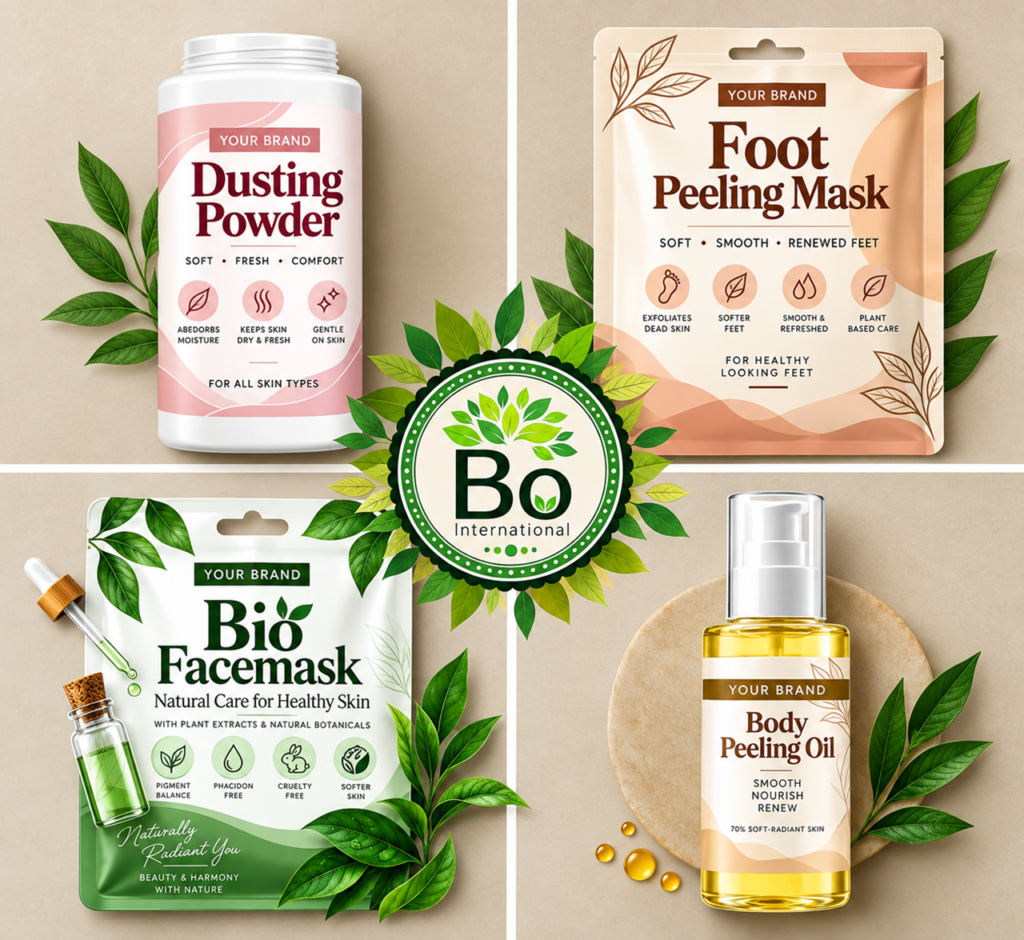
Rather than offering only production, the company can support a business from product concept and formulation through sampling, manufacturing, filling, packaging, labeling and shipment. This vertical integration of services is rare in the manufacturing industry, where most competitors specialise in one or two areas.
The differentiating factors are clear:
1. Integrated Product Development
The company doesn’t just manufacture to specifications; it can help brands develop, adapt, and optimise formulations. The R&D team works with clients to solve product challenges, improve performance, and meet market requirements.
2. Manufacturing Infrastructure at Scale
A 130,000 sq ft facility, capacity of up to 15 tons per day, and access to 3,000+ natural and naturally derived ingredients gives Bo International the ability to serve everyone from small emerging brands to large established companies.
3. Comprehensive Service Spectrum
From private label manufacturing (brands use Bo’s formulations) to third-party and contract manufacturing (clients provide formulations) to complete custom formulation, Bo International serves the entire spectrum of brand requirements.
4. Product Category Breadth
Skincare, haircare, perfumes, makeup, men’s grooming, baby care, bath & body, oral care, pet care, aromatherapy, Ayurvedic products-the company’s expertise spans 12+ categories, reducing client risk by having a partner who understands different product types.
5. International Capability
Serving 50+ countries requires understanding different regulatory requirements, shipping logistics, packaging standards, and market preferences. Bo International has built this expertise over years of international expansion.
6. Quality and Compliance
In an industry where regulatory compliance is critical, the company’s systems for quality control, testing, and compliance management are non-negotiable differentiators.
This integration of capabilities means Bo International doesn’t compete just on manufacturing cost or capacity-it competes on being a complete product-development and manufacturing partner that reduces client risk and accelerates time-to-market.
The Beauty Industry’s Changing Dynamics
Bo International growth reflects broader shifts in the global beauty industry that create opportunity for manufacturing partners like the company.
The democratisation of beauty brands: Historically, launching a beauty brand required significant capital for manufacturing infrastructure. Today, entrepreneurs can launch with smaller order quantities and test-and-iterate approaches, provided they have a flexible manufacturing partner. Bo International’s ability to handle small batch sizes for sampling and testing enables this model.
The rise of direct-to-consumer brands: D2C beauty brands need fast product development, differentiated formulations, and attractive packaging to compete. Bo International’s product-development capabilities and design support help D2C brands launch faster and with more confidence.
International expansion expectations: Even emerging Indian brands now expect to access international markets. This requires understanding export compliance, international shipping, and market-specific requirements. Bo International’s international business operations and shipping support enable this.
Sustainability and ingredient innovation: Brands increasingly compete on ingredient quality, sustainability, and natural formulations. Access to 3,000+ natural and naturally derived ingredients and the expertise to formulate with them is a meaningful differentiator.
Rapid market changes: The beauty industry moves fast-trends shift, new ingredient innovations emerge, and consumer preferences evolve. Brands need manufacturing partners who can adapt quickly. Bo International’s R&D capabilities and willingness to develop new formulations support this agility.
Understanding the B2B Manufacturing Business Model
Unlike consumer-facing beauty brands that generate revenue through direct sales to customers, Bo International generates revenue through B2B manufacturing relationships. The business model is fundamentally different and requires different operational thinking.
Pricing is customised: Rather than fixed pricing, manufacturing costs vary based on product type, formulation complexity, ingredients, packaging, order quantity, customisation, and labeling requirements. Each client essentially has a custom price based on their specific requirements.
Revenue is relationship-based: The company’s success depends on understanding client requirements, building reliability, and maintaining long-term partnerships. A single client might place multiple orders over years, growing their business as Bo International supports them.
Operational complexity is high: Managing 500+ clients with different requirements, formulations, packaging, and shipping destinations requires sophisticated operational systems, inventory management, and logistics coordination.
Quality is non-negotiable: Any quality issue doesn’t just affect one transaction-it can damage long-term relationships and the company’s reputation. The investment in quality control systems, testing, and consistency is therefore critical.
Minimum order quantities matter: Unlike consumer sales where customers can buy single units, manufacturing typically has minimum order quantities (MOQs). Managing MOQs across a diverse client base is operationally complex.
The Journey to 500+ Clients Across 50+ Countries
Bo International’s growth from a startup manufacturing partner to serving 500+ clients across 50+ countries reflects the company’s ability to scale operations, expand internationally, and build trust across diverse markets.
The early growth phase (2013–2018) focused on establishing manufacturing capabilities, building client relationships through referrals, and proving reliability within India’s beauty industry. The company worked primarily with emerging Indian beauty brands seeking manufacturing support.
The mid-growth phase (2018–2021) saw expansion into international markets. Serving clients across 50+ countries required developing new capabilities: understanding different regulatory environments, managing international shipping, supporting export documentation, and adapting to market-specific requirements. This phase required investment in international business expertise and logistics capabilities.
The scaling phase (2021–2024) focused on optimizing operations to serve 500+ clients efficiently. This required investment in systems, people, and process standardisation. The company scaled its team to 250+ professionals, invested in R&D capabilities, and expanded its manufacturing facility and infrastructure.
Throughout this journey, the company remained focused on the core value proposition: being a dependable product-development and manufacturing partner for businesses at different stages of growth.
Core Competencies: Why 250+ Professionals Matter
Bo International’s team of 250+ professionals is not a vanity metric-it represents the operational depth required to serve 500+ clients with different requirements across 50+ countries.
The team includes:
- Chemists and chemical engineers who develop and adapt formulations
- Product-development specialists who work with clients to solve technical challenges
- Manufacturing professionals who manage production, quality control, and consistency
- Quality-control experts who ensure products meet specifications and regulatory requirements
- Packaging and labeling specialists who manage design, production, and compliance
- International business professionals who manage export, logistics, and market-specific requirements
- Operations managers who coordinate across different functions
This specialisation matters because serving 500+ clients efficiently requires that each function operates at high capability. A formulation mistake, a packaging error, or a shipping delay isn’t just a small operational issue-it directly affects client satisfaction and the company’s reputation.
The investment in this team depth is a strategic differentiator that most smaller manufacturers simply can’t match.
The Manufacturing Ecosystem: Integrating a Complex Value Chain
Bo International’s competitive advantage lies partly in how it integrates different elements of the manufacturing value chain-something most competitors handle as separate services.
Ingredient sourcing: Access to 3,000+ natural and naturally derived ingredients means Bo International can source directly rather than relying on clients to source ingredients. This centralises cost, ensures quality, and simplifies client requirements.
Formulation and R&D: Rather than manufacturing to fixed formulas, the R&D team can adapt formulations based on client needs, ingredient availability, market preferences, and performance requirements.
Manufacturing: The 130,000 sq ft facility with 15 tons per day capacity allows the company to handle small batches for emerging brands and large volumes for established companies.
Quality control and testing: In-house testing and quality control systems ensure products meet client specifications and regulatory requirements before shipping.
Packaging and labeling: By managing packaging and labeling in-house (or with trusted partners), Bo International ensures consistency and reduces client coordination burden.
International logistics: Managing export documentation, shipping coordination, and compliance with international regulations simplifies the client’s responsibility.
This integration means clients can work with one partner across their entire manufacturing journey rather than coordinating with multiple suppliers. This is operationally simpler for clients and creates higher switching costs, making relationships stickier.
Key Learnings: What 11 Years of Manufacturing Taught Aayush Gupta
Gupta’s reflections on building Bo International over a decade reveal lessons that extend beyond manufacturing into broader business building.
1. B2B is built on relationships, consistency and adaptability
“Long-term business growth is built on relationships, consistency and adaptability,” Gupta reflects. “In B2B manufacturing, every client can have different requirements related to formulation, packaging, product performance, quantity and market. Learning to understand these requirements and build processes that can accommodate different businesses has been an important part of Bo International’s growth.”
This insight-that B2B success requires both standardisation (to scale) and customisation (to serve diverse clients)-is particularly relevant for manufacturing businesses where efficiency and responsiveness must coexist.
2. Continuous investment is essential
“Manufacturing businesses need to continually invest in people, technology, product development and quality systems as markets evolve,” Gupta emphasises.
The beauty industry changes constantly: new ingredients emerge, regulations tighten, client expectations evolve, and competitive dynamics shift. Bo International’s competitive position depends on staying ahead of these changes through continuous investment. A company that stops investing in R&D, people, and systems quickly becomes obsolete.
3. Trust requires understanding client needs deeply
The journey from “manufacturer” to “strategic partner” required understanding that clients need more than production. This deeper understanding of client problems-not just manufacturing, but formulation, product development, packaging, and market access-allowed Bo International to position itself differently and build stronger relationships.
What’s Next: Strengthening Capabilities and Expanding Internationally
Bo International’s goals for the coming period reflect the company’s positioning to serve the next wave of beauty brands:
Expanding international business relationships: The company will continue building presence in key international markets where beauty brands are growing and seeking manufacturing partners.
Developing new formulations: Investment in R&D to create proprietary formulations and stay ahead of ingredient trends, helping differentiate client products.
Strengthening R&D capabilities: Building deeper product-development expertise to serve more complex client requirements.
Expanding product categories: While already serving 12+ categories, the company is exploring adjacent categories and new product types.
Supporting emerging beauty brands: As the beauty industry continues to democratise, more emerging brands will need manufacturing partners. Bo International is positioning itself to serve this growing segment.
Improving manufacturing efficiency: Continued investment in automation, systems, and process optimisation to handle larger volumes while maintaining quality.
Building long-term partnerships: Rather than transactional relationships, the focus is on becoming strategic partners in client growth.
The overarching goal, according to Gupta, is to move from being viewed simply as a manufacturer to being recognised as a strategic product-development and manufacturing partner for beauty brands.
Lessons for Entrepreneurs in Beauty and Beyond
Gupta’s advice to fellow entrepreneurs reflects the hard-won wisdom of building a B2B manufacturing business:
Start by understanding the problem and customer: “Entrepreneurs should start by understanding the problem they want to solve and the customer they want to serve.”
In the beauty industry especially, having a good product idea is necessary but not sufficient. Entrepreneurs need to think about formulation, quality, packaging, compliance, manufacturing, branding, distribution and customer experience holistically. Those who treat these as separate problems rather than an integrated system struggle to execute.
Be patient-trust takes time: “It is important to be patient. Building a sustainable B2B business takes time because trust and reputation are built through consistent execution.”
This is perhaps the most important lesson for entrepreneurs entering B2B manufacturing. Consumer businesses can sometimes grow through viral marketing or rapid scaling. B2B manufacturing cannot. Every client relationship is built through repeated delivery of quality, reliability, and responsiveness. This takes time.
Learn and adapt continuously: “Entrepreneurs should remain willing to learn and adapt. Markets change, customer expectations change and new technologies emerge. Businesses that continue improving while staying focused on their customers have a stronger foundation for long-term growth.”
The beauty industry is particularly dynamic. Ingredient trends shift, regulatory requirements change, client preferences evolve. Companies that build processes and stay rigid on how they operate eventually lose relevance. Continuous learning and adaptation are essential.
Broader Implications: The Role of Specialised Manufacturing Partners
Bo International’s success reflects a broader trend in global manufacturing: the rise of specialised, full-service manufacturing partners that serve as extensions of brand teams rather than simple suppliers.
Historically, brands either built their own manufacturing or worked with contract manufacturers who offered limited services. Today’s most successful models involve partnerships where the manufacturer contributes product-development expertise, quality systems, supply-chain management, and market insights alongside production.
This trend benefits multiple stakeholders:
- Emerging brands can launch with smaller capital requirements and more confidence
- Established brands can accelerate new product launches and access specialised expertise
- Manufacturers build stronger, stickier relationships with higher-value partnerships
- Consumers benefit from faster innovation and more differentiated products
Bo International position as a comprehensive manufacturing partner-not just production, but formulation, product development, packaging, and international support-positions it to capture significant value as this trend continues.
Conclusion
Bo International journey from a manufacturing startup to serving 500+ clients across 50+ countries illustrates how sustainable value is created in B2B industries: not through disruptive innovation, but through deep understanding of client problems, operational excellence, continuous investment in capabilities, and patient relationship building.
The beauty and personal-care industry’s rapid growth, combined with the democratisation of brand launching, has created a structural opportunity for manufacturing partners who can provide not just production, but product development, quality assurance, compliance expertise, and international logistics support. Bo International has positioned itself to be that kind of partner.
For entrepreneurs looking to launch beauty brands, Bo International existence is meaningful-they no longer need to build manufacturing infrastructure in-house. For entrepreneurs looking to build B2B manufacturing businesses, Bo International’s journey offers a playbook: invest in deep client understanding, build capabilities that solve multiple client problems, maintain consistent quality, and scale through relationship-based growth.
In an industry often focused on consumer-facing brands and venture-backed hype, Bo International reminds us that substantial, sustainable value is often created by companies that solve fundamental business problems for other businesses-reliably, consistently, and at scale.
Disclosure
This article is based on an interview with Aayush Gupta, CEO of Bo International. Company-reported figures-including client count (500+), countries served (50+), facility size (130,000 sq ft), production capacity (15 tons per day), and team size (250+)-have not been independently audited for this article. Current annual turnover and funding information have not been publicly disclosed on the company’s website and should be confirmed directly with the company if required for publication. All figures should be considered company-reported.
 How This Entrepreneur Built India’s First Organised Paan Café Chain: From ₹2 Lakh to a ₹50 Crore Tobacco‑Free Franchise Network
 How a 17-Year-Old Student Is Bringing Hands-On Electronics Education to Rural Youth in India