

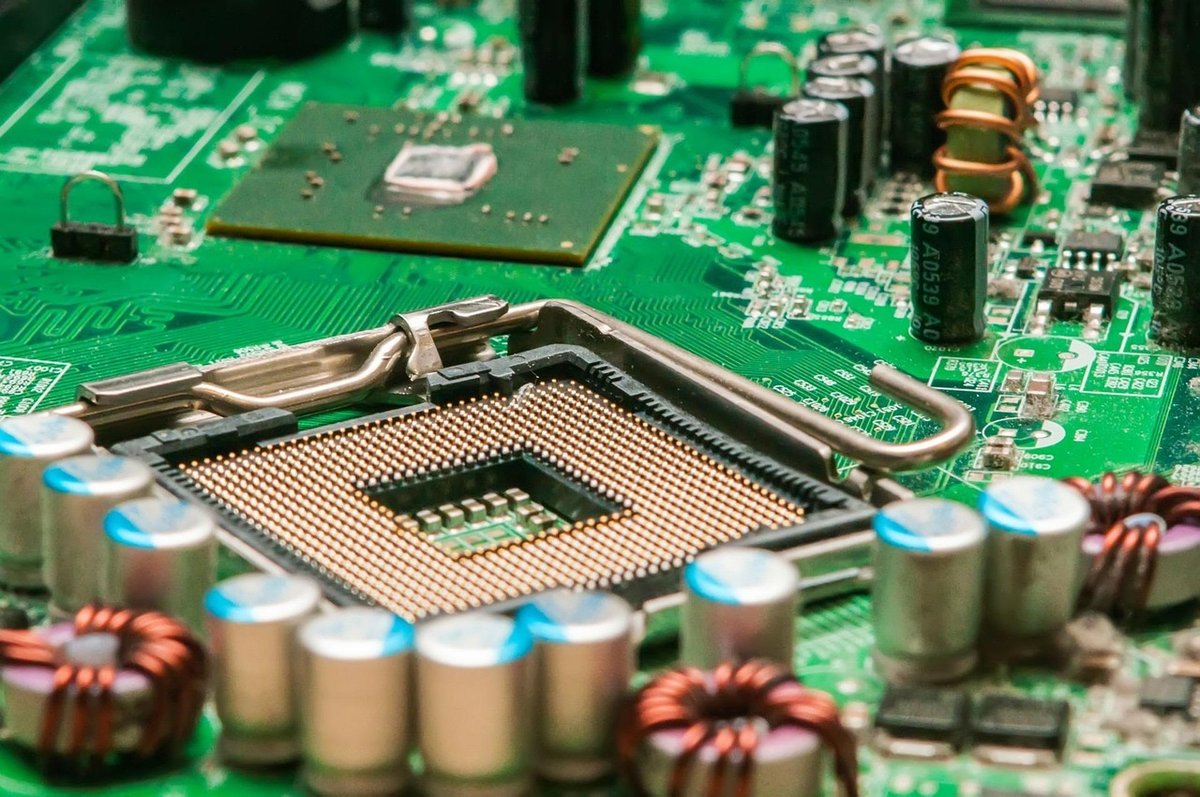
Imagine an India where every smartphone, car, and satellite runs on chips made in its own backyard. That future is closer than you think. As semiconductors become the “new oil” of the global economy, India stands poised to transform from a predominantly service-oriented nation to a manufacturing giant in the world’s most critical industry.
Every modern device; from the phone in your pocket to the servers powering this article depends on semiconductors. India is now racing to secure its place in this $574 billion global industry, with ambitious plans that could reshape both its economy and strategic position on the world stage.
Market Opportunity: A $100 Billion Vision
The numbers tell a compelling story. India’s semiconductor market, valued at $34.3 billion in 2023, is projected to reach $100.2 billion by 2032; a nearly threefold expansion that outpaces many developed markets. This growth trajectory represents one of the most significant industrial opportunities in India’s post-independence history.
Three key drivers fuel this expansion:
- Digital transformation: India’s massive push toward digitization across sectors
- Electronics manufacturing: Government initiatives to build domestic production capabilities
- Global supply chain shifts: Companies seeking alternatives to concentrated manufacturing hubs
Policy Framework and Global Investment
National and State-Level Strategy
The Indian government has demonstrated remarkable foresight with the “Make in India” initiative and Indian Semiconductor Mission. These programs offer tangible benefits including the Production Linked Incentive scheme providing up to 50% capital expenditure support for semiconductor projects.
State governments are creating a competitive advantage through targeted policies. Gujarat landed Micron’s $2.75 billion memory packaging facility, while Odisha secured India’s first commercial compound semiconductor fab. This distributed approach creates multiple regional hubs rather than concentration in a single location – a strategic advantage for supply chain resilience.
International Partnerships
Global semiconductor leaders are recognizing India’s potential. Beyond Micron’s Gujarat investment, companies like Applied Materials and Lam Research are establishing R&D centers in India. These partnerships leverage India’s engineering talent while building local manufacturing capabilities.
The timing is strategic. US-China trade tensions and post-COVID supply chain vulnerabilities have driven companies to diversify manufacturing bases, creating unprecedented opportunities for India.
Human Capital: India’s Greatest Asset
India’s most significant advantage lies in its engineering talent. With nearly 20% of global semiconductor design talent and over 100,000 VLSI engineers, India has already established itself as a chip design powerhouse.
Bridging the Skills Gap
However, transitioning from design to manufacturing requires different expertise. India needs approximately 300,000 additional fabrication engineers by 2030. The solution involves:
Educational partnerships: IIT Madras has launched specialized semiconductor courses in collaboration with global firms Industry training: Programs with companies like TSMC are creating practical, hands-on experience Upskilling initiatives: AI-driven platforms and global MOOCs are helping existing engineers transition to manufacturing roles
Ecosystem Development and Innovation
Building the Supply Chain
Indian companies are moving beyond services to manufacturing. Tata Chemicals is entering semiconductor materials, while other firms build packaging and testing capabilities. This vertical integration reduces import dependence and creates a more resilient supply chain.
Strategic Acquisitions
L&T Semiconductor Technologies’ acquisition of Fujitsu General’s power module unit exemplifies India’s strategic approach. This move enhances capabilities in power semiconductors critical for the booming electric vehicle and renewable energy sectors. Such acquisitions demonstrate sophisticated understanding of the semiconductor value chain.
Challenges and Realities
Despite optimistic projections, significant hurdles remain:
Import Dependence: India imports 85% of its semiconductors. Reducing this to 50% could take a decade with sustained investment.
Capital Requirements: Advanced fabs cost $15-20 billion each. Public-private partnerships, similar to Taiwan’s TSMC model, could help offset these massive investments.
Infrastructure Needs: Semiconductor manufacturing demands ultra-stable power, pure water, and sophisticated waste management requiring coordinated infrastructure development.
Technology Access: Securing cutting-edge manufacturing technology from a limited number of global players remains a diplomatic and commercial challenge.
Future Outlook: The Next Five Years
India’s semiconductor strategy focuses on three priorities through 2030:
- Scaling manufacturing: Achieving 28nm fabrication capabilities
- Emerging technologies: Positioning for AI chips and quantum computing applications
- Sustainable production: Implementing renewable energy for fabs to address environmental concerns
Success depends on sustained government support, continued private investment, and aggressive talent development. The Quad partnership with the US, Japan, and Australia provides diplomatic leverage for technology transfers.
Strategic Implications
India’s semiconductor success will deliver:
Economic Impact: Millions of high-skill jobs and reduced technology imports worth $63 billion annually
Strategic Independence: Enhanced technological sovereignty and reduced vulnerability to supply disruptions
Global Leadership: Establishment as a major player in international technology governance
Conclusion
India’s semiconductor revolution represents more than industrial policy; it’s a strategic imperative for the 21st century. With engineering excellence, government commitment, and global partnerships, India isn’t just manufacturing chips; it’s manufacturing its future as a technology superpower.
The foundation is set. The investments are flowing. The talent is ready. India’s next semiconductor leap will determine not just its economic trajectory, but its position in the global technology hierarchy for generations to come.
Stakeholders across industry, government, and academia must unite to turn this ambitious vision into reality.
 Engineers’ Day 2026: What Sir M. Visvesvaraya Teaches Indian Startups
 15 Electric Mobility Startup Opportunities India Needs Now
 World EV Day 2026: Is Switching to Electric Actually Cheaper for Indian Riders and Businesses?