

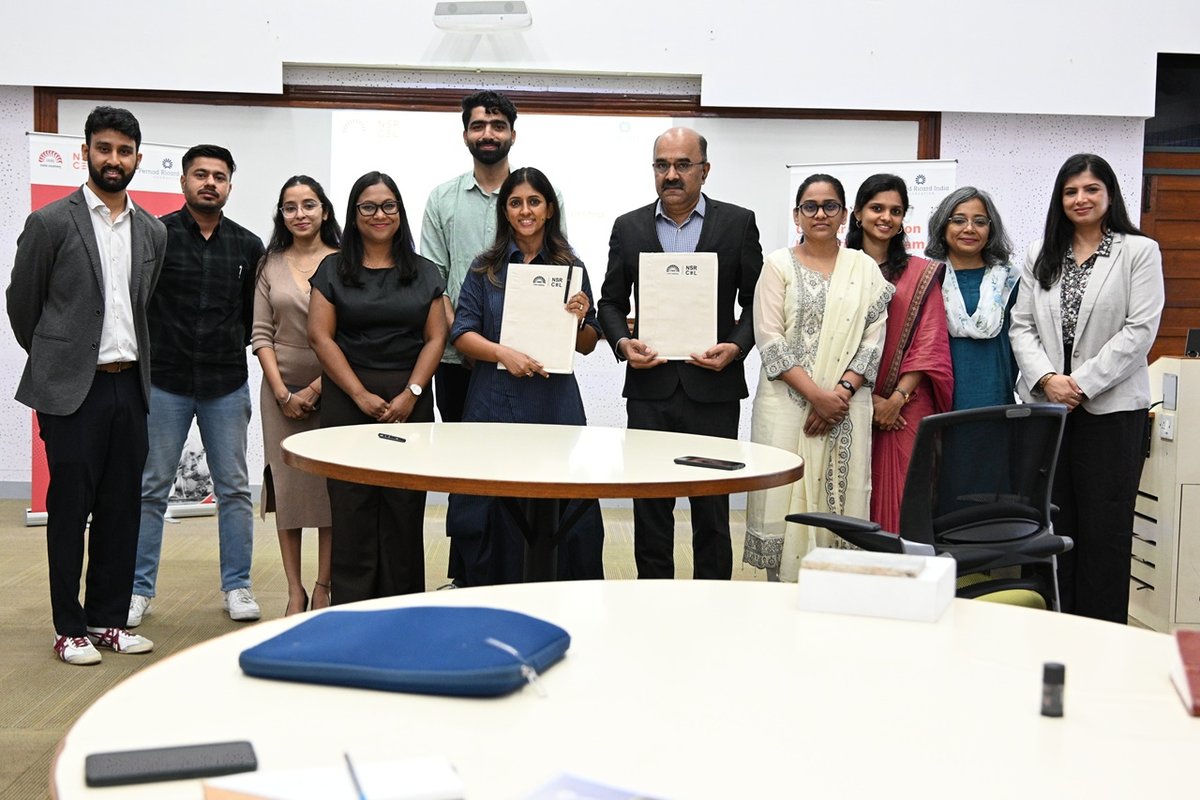
Key Highlights:
- Pernod Ricard India Foundation (PRIF), in partnership with NSRCEL, IIM Bangalore, has launched the first cohort of the Circular Innovation Incubation Program.
- The programme will support 12 early-stage startups working on circular economy and climate innovation solutions.
- Selected startups will receive a combined grant support of ₹95 lakh.
- The cohort focuses on three priority themes: Plastic Circularity, Glass Circularity and Climate-Smart Agriculture.
- Participating ventures will receive incubation support, mentoring, market validation assistance, fundraising readiness and ecosystem access.
- The initiative builds on three earlier cohorts through which 58 startups received ₹3.2 crore in grant funding.
Bengaluru, November 25, 2026: Pernod Ricard India Foundation (PRIF), in partnership with NSRCEL, IIM Bangalore, has announced the launch of the first cohort of its Circular Innovation Incubation Program, designed to support startups developing scalable solutions for India’s circular economy and climate challenges.
The programme brings together 12 early-stage startups working across sustainability, resource efficiency and climate innovation, with a focus on turning innovative ideas into commercially viable and environmentally impactful businesses.
Supporting Circular Economy Innovation
The selected cohort includes startups such as:
- EarthKind Innovations
- Thaal Innovations
- HV Electric Vehicle
and other ventures working across critical areas of environmental innovation.
The programme focuses on three key themes:
Plastic Circularity
- Recycling innovation
- Waste management solutions
- Alternative materials
- Reverse logistics systems
Glass Circularity
- Glass recovery systems
- Recycling and reuse initiatives
- Circular value chain solutions
Climate-Smart Agriculture
- Precision agriculture
- Traceability solutions
- Food-waste innovation
- Bioenergy development
- Water-efficiency technologies
The cohort reflects the programme’s objective of supporting practical solutions capable of creating measurable environmental and economic impact.
Building on Earlier Success
The Circular Innovation Incubation Program builds on the foundation established through three previous cohorts of the Circular Economy Incubation Program.
Key outcomes from earlier cohorts include:
- 58 startups supported
- ₹3.2 crore deployed in grant funding
- Multiple circular economy innovations incubated
The latest programme introduces a stronger focus on:
- Stage-based incubation
- Pilot and validation pathways
- Market adoption support
- Funding readiness
- Ecosystem engagement
Beyond Traditional Incubation
The initiative has been designed to provide founders with practical venture-building support rather than relying solely on classroom-based learning.
Participating startups will receive support across:
- Business model development
- Go-to-market strategy
- Market validation
- Legal readiness
- Compliance support
- Impact measurement
- Fundraising readiness
- Ecosystem access
The programme will also include:
- Milestone-based grant funding
- In-person bootcamps
- Virtual incubation sessions
- Expert-led workshops
- Mentor access
- Investor interactions
Focus on Commercial Adoption
A major objective of the programme is helping startups progress from innovation and pilot projects to scalable commercial deployments.
The incubation model incorporates:
- Pilot opportunities
- Product validation pathways
- Stage-specific mentorship
- Funding preparedness
- Green finance linkages
- Blended finance opportunities
The intention is to enable founders to build repeatable and sustainable business models that extend beyond the incubation period.
Tailored Support for Startup Growth
The programme targets founders who have moved beyond the idea stage and are currently operating at either:
- Prototype stage
- Early-revenue stage
Recognising that startup needs vary significantly, the programme provides customised support depending on the venture’s stage of development.
Areas of support may include:
- Customer acquisition
- Strategic partnerships
- Business model development
- Pilot deployment
- Investment readiness
- Revenue growth
Anantika Singh, Senior Director – CSR, Pernod Ricard India, said: “Circularity is key to building a more resource-efficient and sustainable future. Through this program, we aim to support entrepreneurs developing innovative solutions across waste management, resource recovery and climate-smart agriculture.”
She added: “By backing these ventures, we hope to contribute to meaningful environmental impact and accelerate the transition towards a circular economy.”
NSRCEL Perspective
Rasika Prashant, CEO, NSRCEL, IIM Bangalore, said: “India’s transition towards a sustainable future depends on turning innovative ideas into solutions that can create impact at scale.”
She added: “Our entrepreneurs have the potential to address critical environmental challenges, create green jobs and contribute to a stronger, more sustainable economy.”
Commenting on the collaboration, Prashant noted: “Through our partnership with Pernod Ricard India Foundation, we aim to support these founders with the right business capabilities, industry connections and market access to take their solutions beyond the early stages.”
Measuring Impact
The success of the programme will be evaluated through a combination of business, ecosystem and environmental outcomes.
Areas of measurement include:
Venture Growth
- Business model strengthening
- Revenue progression
- Customer growth
- Partnership development
- Investment readiness
Environmental Impact
- Resource efficiency
- Waste diversion
- Emissions reduction
- Climate resilience outcomes
Social Impact
- Livelihood generation
- Job creation
- Community impact
Long-Term Vision
Through the Circular Innovation Incubation Program, PRIF and NSRCEL aim to build a stronger pipeline of sustainability-focused businesses capable of addressing environmental challenges through scalable innovation.
The long-term objective is to help founders establish customers, partnerships and sustainable revenue streams that enable continued growth well beyond the incubation period.
 Amazon Reaches $27 Billion in Cumulative Ecommerce Exports from India, Advances Towards $80 Billion Target by 2030