Synopsis:
- Origin: Apoorv Gupta, student of Dhirubhai Ambani International School, designed a DIY electronics kit after teaching rural students who had never touched real circuits.
- Impact: Over 3,000 students across 25+ schools in Haryana have engaged with Udaan kits.
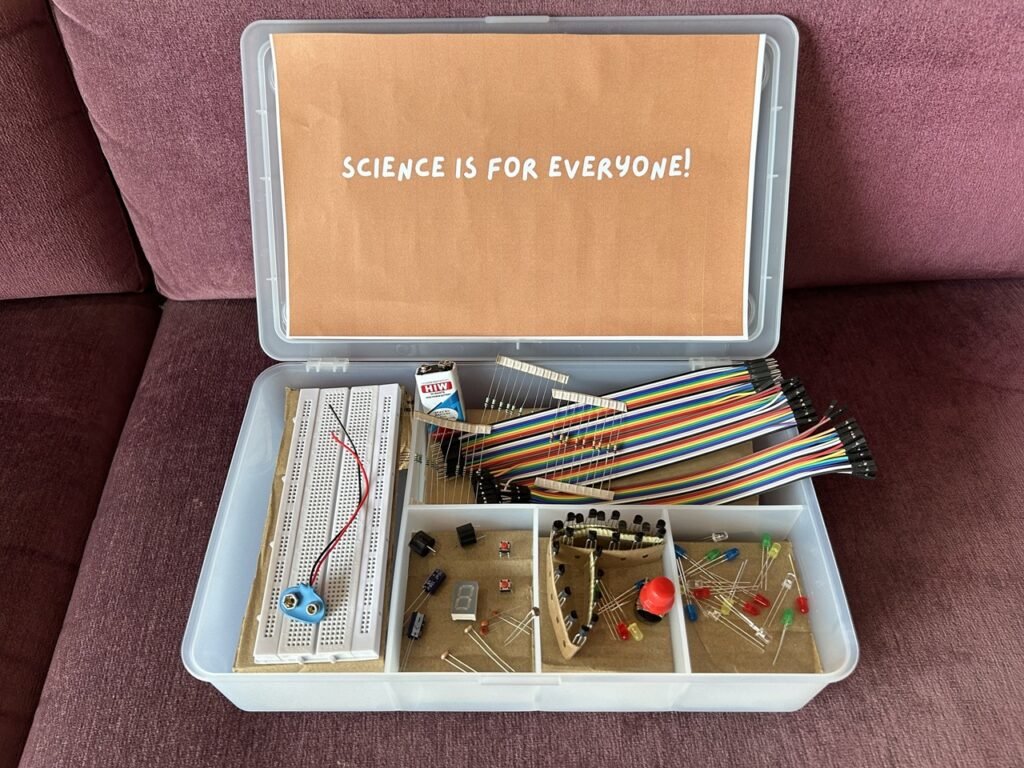
- Innovation: Kits include breadboards, LEDs, buzzers, resistors, capacitors, and more, allowing students to build circuits from scratch.
- Recognition: Apoorv received the Young Changemaker Award, NGO felicitations, and media coverage.
- Future: Expansion to Maharashtra, mentor-led kit assembly, and integration of environmental awareness into Udaan’s curriculum.
It started with a breadboard and a question he wasn’t expecting.
Apoorv Gupta was in Grade 10, fifteen years old, when he volunteered with an NGO to teach practical science to students in rural areas. He brought along his own electronics kit and demonstrated how a circuit worked. The response from the children was immediate and overwhelming. Hands shot up across the room, not with answers, but with questions. Where could they get a breadboard? Where could they find the components? Where could they learn to do this on their own?
These were students who had studied circuit diagrams in textbooks, who could describe how electricity flows through a series circuit in an examination, but who had never once held a real wire or watched a bulb actually light up. The gap between what they knew on paper and what they could do with their hands was vast.
Apoorv went home and started designing a kit.
Building Something From Scratch
Over the next three to four months, he worked through every stage of the process himself, conceptualising the design, deciding which components to include, sourcing them, testing each one for viability across different experiments, and finally assembling everything into a package that a student with no prior experience could pick up and immediately use.
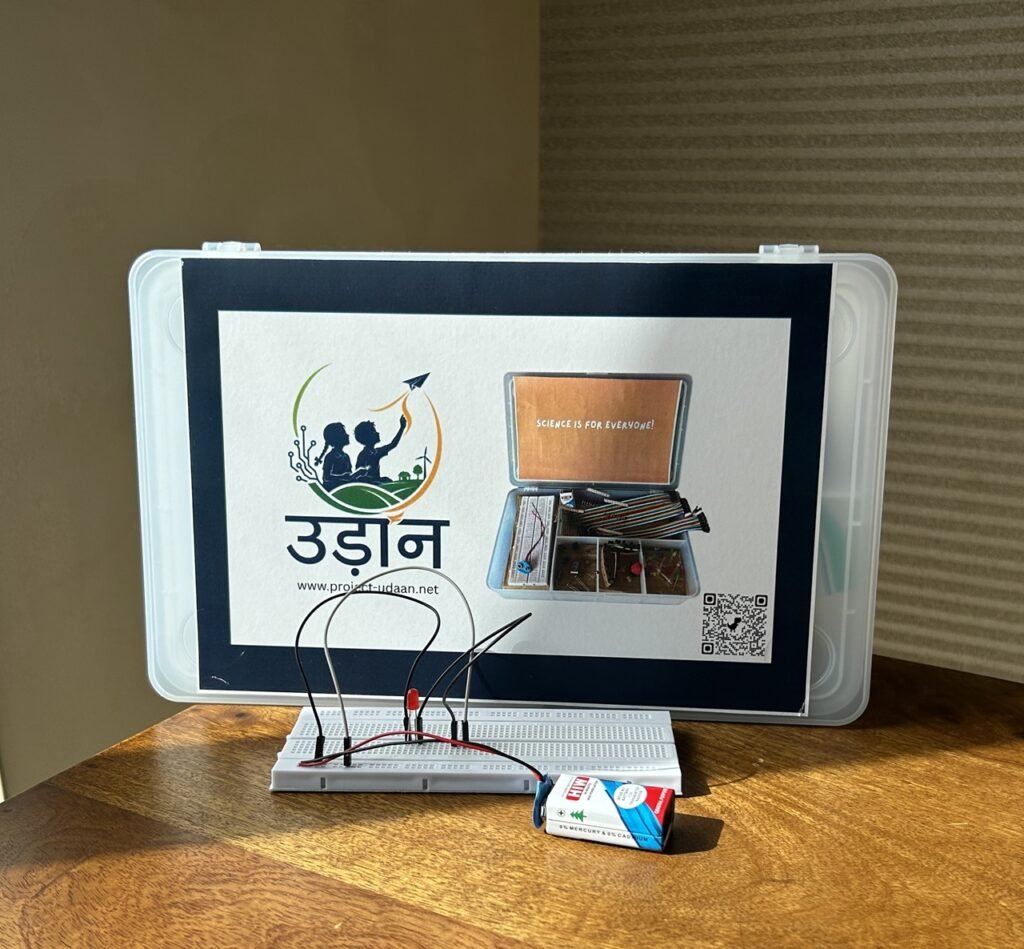
The result was a single versatile DIY electronics kit containing a breadboard, LEDs, a buzzer, a potentiometer, resistors, RGB components, a battery, transistors, and capacitors. From this one kit, students can build a remarkable range of circuits, series and parallel configurations, a working doorbell, a burglar alarm, a night detection lamp, and more. The kit asks nothing of the student beyond curiosity. No external devices, no specialised equipment, no prior knowledge required.
He then built a website project-udaan.net and recorded video tutorials walking students through each experiment step by step. The site has become both a learning library and a community space where students could ask questions, share their own circuit ideas, and learn from one another. He called the initiative Udaan. It means flight.
Taking It to the Classrooms
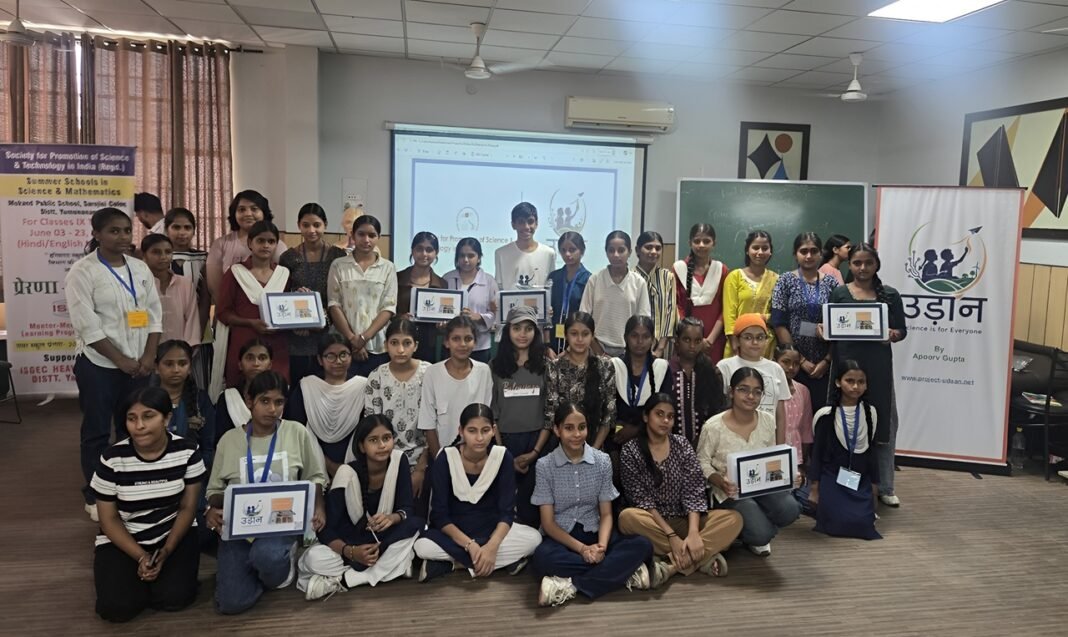
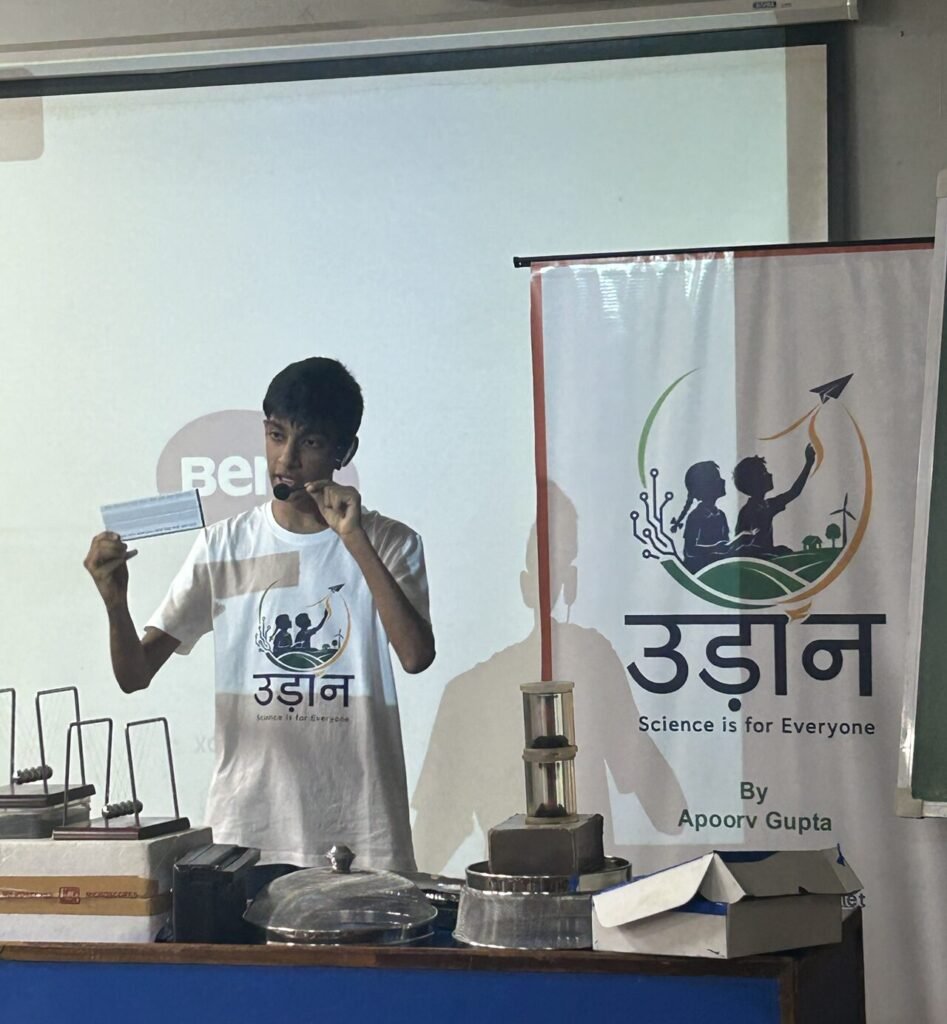
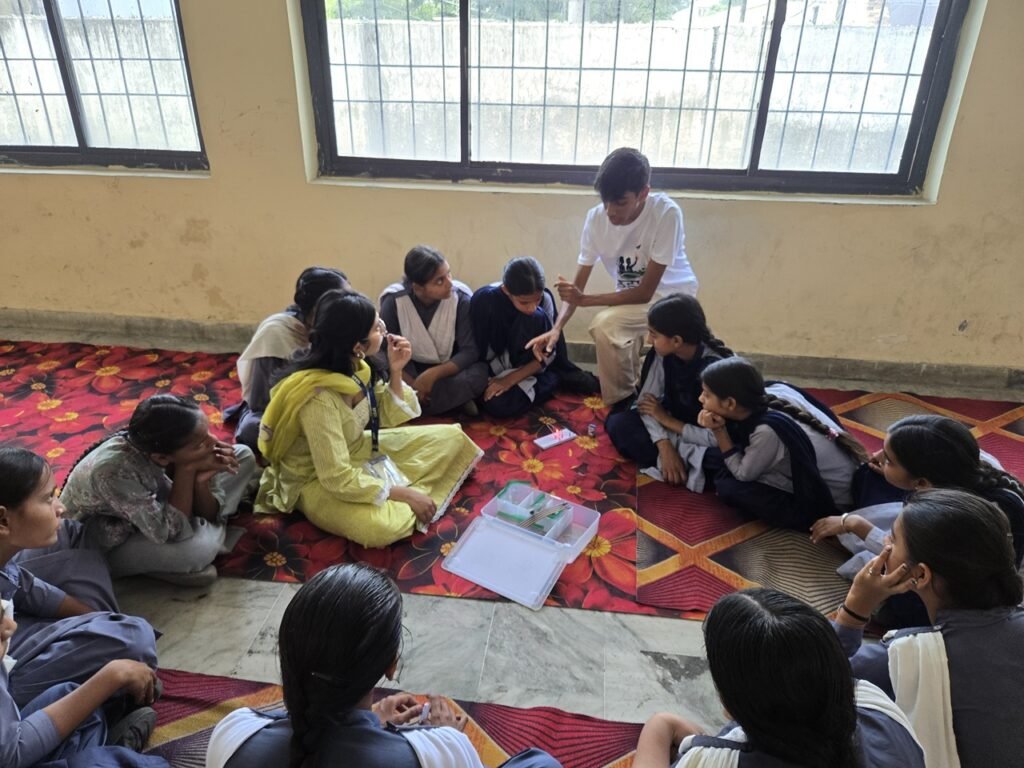
Through partnerships with two NGOs, the Society for Promotion of Science and Technology in India (SPSTI) and Ek Soch Nai Soch, Apoorv began conducting hands-on science workshops for students mostly from government schools in Haryana. Each session ran three to four hours and was deliberately interactive. Students worked in groups, built circuits together, asked questions, made mistakes, and tried again. The structure was simple: learn by doing, discover by experimenting.
What happened at the end of workshops said everything. After the structured activities were complete, students would stay with the kits and start combining elements on their own, a buzzer here, an LED there, creating circuits that weren’t in any tutorial. They were inventing. Independently. With tools they had held for a matter of hours.
To extend the reach well beyond what Apoorv could cover through personal visits, he trained both school mentors and student mentors to facilitate sessions independently. He also worked with SPSTI to integrate the Udaan kits into their science mobile van, a unit that travels throughout the year to government schools across the region delivering practical science education. Udaan kits are a permanent part of what that van carries, multiplying the programme’s reach.
To date, over 3,000 students across more than 25 schools have engaged with the Udaan programme through workshops, mentor-led sessions, and independent learning through the website. The number continues to grow.
Recognition That Confirmed the Impact
The principal of a school in Yamunanagar reached out to Apoorv personally after her students attended a workshop. She congratulated him, asked for more kits, and shared something that gave the initiative an unexpected institutional significance: the hands-on circuit work Udaan enables aligns directly with the Composite Skills Lab section now included in the CBSE curriculum under India’s National Education Policy. What Apoorv had built out of personal conviction turned out to be precisely what a national education reform was calling for.
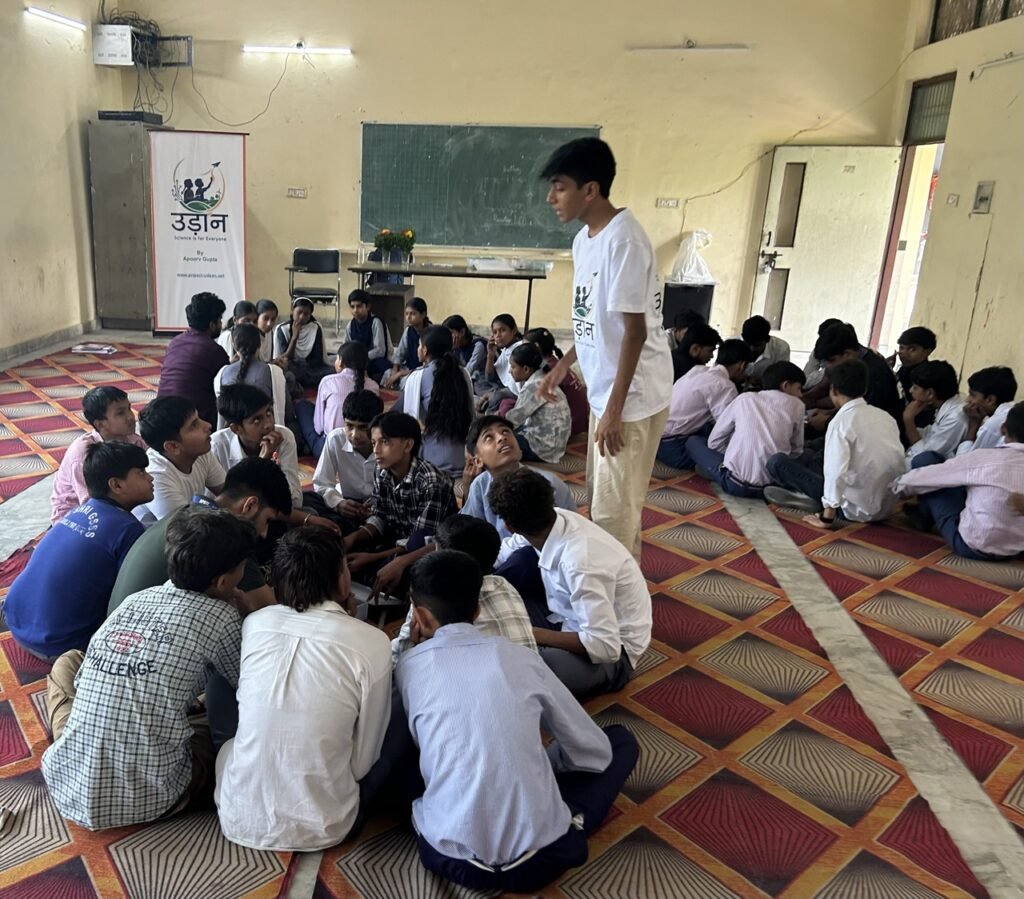
The heads of both partner NGOs felicitated Apoorv for his contribution to rural science education. He received the Young Changemaker Award, was formally recognised by Mr. Sanjeev Sehgal, Principal of Seth Jai Prakash Polytechnic in Damla, and Mrs. S. Bathla, Director of Mukand Lal Public School in Yamunanagar, and was featured in Dainik Savera Times. Appreciation messages arrived from students, teachers, and school authorities across every school the programme had touched.
The kits, notably, have never been for sale. Initially self-funded by Apoorv, the initiative later received donations to sustain production. Kits are made as needed and distributed where the need is greatest, a model built entirely around community benefit rather than commercial return.
A Student Who Doesn’t Stop
Udaan is not the full picture of who Apoorv Gupta is. The same curiosity that drove him to design a DIY electronics kit for rural students also led him to conduct independent research in air quality and water quality, and to develop a prototype of pothole detector to improve road safety for two-wheeler riders, a device he presented at the INSEF science fair, where he was awarded a silver medal. He did not enter Udaan in competitions. The initiative was never built for recognition. It was built because students in rural Haryana asked him where they could learn, and he decided to build them an answer.
He is 17 years old and about to begin Grade 12.
What Comes Next
Apoorv is now looking to expand Udaan beyond Haryana, with Maharashtra as the next focus, through partnerships with NGOs that already have established reach in the state. He is also training mentors to assemble the kits themselves, a model that could enable local production and distribution without depending on centralised supply, making the programme more self-sustaining as it grows.
The longer-term vision is broader still. Apoorv wants to integrate environmental awareness into Udaan’s curriculum, bringing his air quality and water quality research into workshops, connecting electronics education to the local environment students actually live in. The website will grow. The kits will reach more hands. The community of self-taught young engineers discovering science through doing will keep expanding.
But at its heart, Udaan remains what it was on the day it started: a fifteen-year-old’s response to a room full of children who wanted to learn and had no way to do it. He gave them the tools. They did the rest.

Submitted by PR Agency