

Authored by: Subodh Bhardwaj, Chief Operations Officer, Navaratna Concepts
Introduction
For a long time, fire safety was treated as a compliance exercise. Extinguishers were installed, exit signs were checked, and annual audits were completed as routine. Compliance defined the end goal. That approach is now evolving.
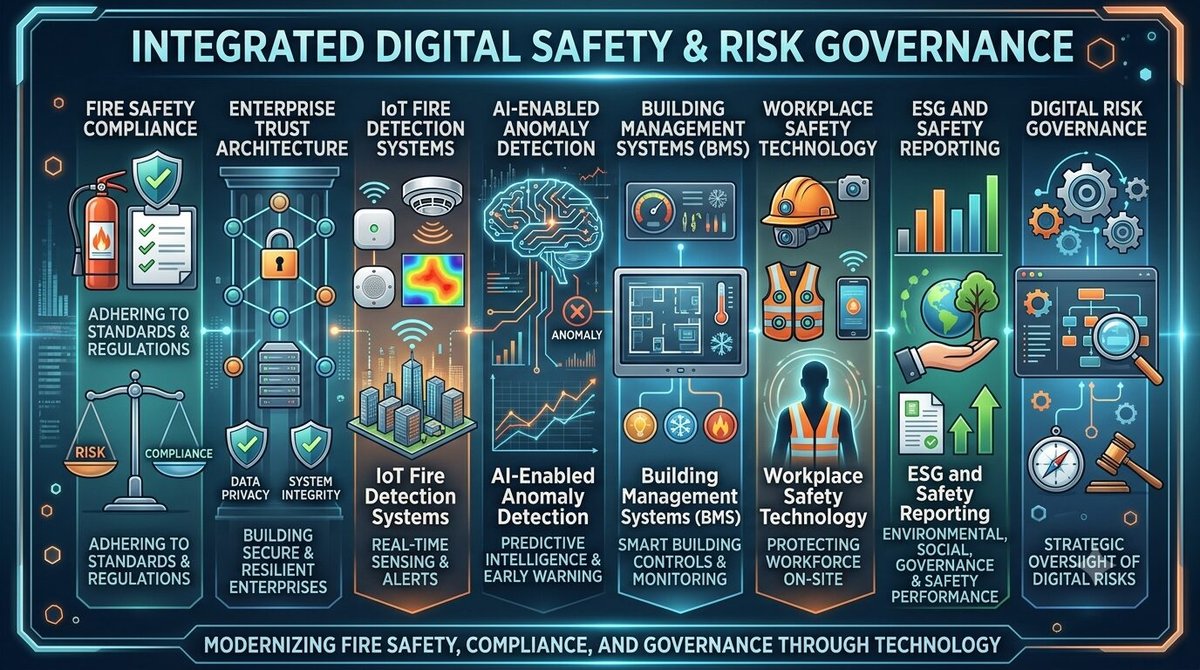
Today, fire safety is becoming part of the enterprise software and digital infrastructure ecosystem, shaped by IoT platforms, cloud-connected sensor networks, and integrated facility management software systems.
Safety has moved into boardroom discussions. The way organisations design, monitor, and manage fire safety now influences trust across customers, employees, investors, and regulators.
The Reputation Dimension of Safety
Fire incidents in commercial buildings, warehouses, or public spaces immediately draw attention to operational readiness and system reliability. Reviews focus on whether safety systems functioned as designed, whether alerts were triggered in time, and whether response protocols operated effectively.
Physical impact carries an immediate cost that insurance frameworks address. Reputation operates differently. In a connected environment, digital incident logs, system telemetry, and compliance dashboards are increasingly reviewed alongside traditional audits, shaping public perception within hours. A single event can define brand perception for an extended period.
Buildings recover through reconstruction. Trust builds through consistent system performance, platform reliability, and continuous monitoring visibility delivered through digital systems.
Modern Risks and Digital Readiness
Fire risk has changed with modern infrastructure. Lithium-ion batteries introduce new operational conditions. These systems require continuous monitoring and AI-enabled anomaly detection models that respond to heat variation, gas release, and thermal instability in real time. EV charging ecosystems across commercial and residential spaces add to this evolving risk profile.
Modern buildings also operate with higher electrical density. Data centers, server rooms, and digitally enabled retail environments increase system load and operational complexity. This environment requires structured monitoring supported by data analytics platforms and real-time monitoring software.
Fire safety now functions as part of a connected cyber-physical system where hardware sensors, IoT devices, and cloud dashboards operate as a unified digital layer.
Detection Systems and Data Intelligence
Fire detection systems have evolved into IoT-enabled monitoring networks. These systems track smoke, heat, and gas conditions across multiple zones and communicate real-time alerts to control teams and mobile platforms through cloud-based monitoring dashboards and API-connected alert systems.
This evolution introduces a new layer of value through data. Sensor logs, alert timelines, and maintenance records create a complete machine-generated audit trail stored in enterprise data systems or cloud platforms.
This information supports operational decisions and strengthens accountability with insurers, regulators, and enterprise partners. Fire safety becomes measurable through structured digital records.
Fire safety systems now operate with characteristics similar to enterprise IT systems. They are connected, monitored, and continuously updated through software-driven infrastructure management tools.
Integrated Building Management Systems
Building Management Systems (BMS) bring fire safety, HVAC, access control, and energy management into a unified software-driven infrastructure platform (BMS platforms integrated with IoT stacks and cloud control systems).
Within this structure, fire safety becomes part of a real-time operational dashboard powered by centralised monitoring software and analytics engines. Facility teams gain visibility into system health, detector status, and suppression readiness at all times.
During emergency situations, integration enables coordinated actions across systems. Alerts can be localized, access points can be managed, and evacuation support can be activated through automated workflow engines and rule-based control systems embedded within BMS software.
For large campuses and multi-tenant facilities, this level of integration supports faster response coordination and stronger operational control through digitally orchestrated safety infrastructure.
Beyond Compliance: Safety as Enterprise Trust
Regulatory standards establish essential requirements for safety systems, maintenance, and emergency readiness. Modern organisations build beyond compliance by adopting continuous monitoring platforms, predictive maintenance algorithms, and integrated safety software ecosystems.
Fire safety now aligns with broader enterprise priorities such as operational resilience, ESG reporting, and digital risk governance frameworks supported by real-time data systems. This positions safety as a core part of enterprise trust architecture built on software-enabled visibility, traceability, and system intelligence.
 Why Startups Need Reputation Before They Need Scale
 How to Start a Medical Tourism Concierge Service Business in India: Step-by-Step Guide
 How to Start a Cleantech Startup: Step-by-Step Guide for Sustainable Innovation